What does sleep actually contribute to training and recovery, and what can we do to support it?
You can get to bed early, see a good sleep score on your watch and yet still wake up feeling tired. Work, stress, training and changes in routine can all affect your sleep.
This guide explains how sleep supports your training, how much you need, and practical ways to improve it, including naps and adjusting training after a poor night’s sleep.
Table of Contents
How Sleep Supports Training and Recovery
Sleep helps you function throughout the day and perform well in training. When you don’t get enough, exercise can feel harder, and your endurance, strength, speed and coordination can suffer. (1)
Sleep also supports muscle recovery. Several nights of severely restricted sleep can reduce muscle protein synthesis, the process that builds new muscle proteins for repair and growth. (2)
How much sleep you lose, and how often, changes the results. One restless night is different from regularly cutting sleep short or going a whole night without it.
Sleep Helps You Retain What You Practise
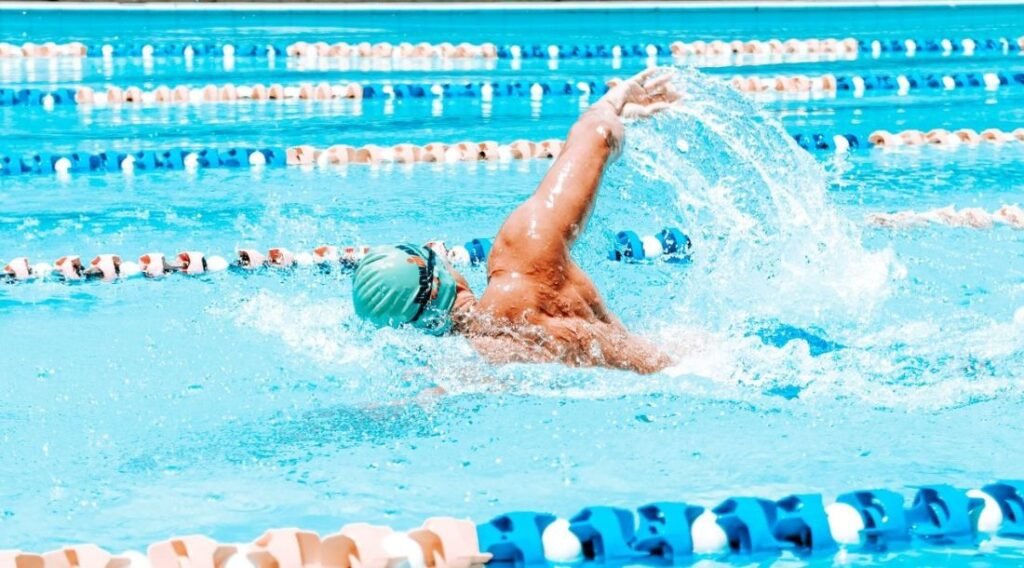
Learning physical skills takes practice, and your brain continues processing what you’ve learnt after the session finishes. Sleep helps stabilise and retain those movement patterns so you can build on them next time. (3)
Whether you’re working on swimming technique or learning a new lift in the gym, give attention to both the practice and the sleep that follows it.
Throughout the night, we cycle through two types of sleep: non-REM and REM. Each contributes to a complete night’s sleep; their functions overlap. (4)
Different types of sleep
There are two main types of sleep: non-REM and REM (rapid eye movement).
Non-REM has three stages, labelled N1, N2 and N3. The first two are light sleep; the third is deep sleep. (4)
| Type of sleep | Stage | What happens and why it matters |
| Non-REM | Stage 1 (N1): light sleep | This short stage takes you from wakefulness into sleep. Your muscles relax, breathing slows and you can wake easily. |
| Non-REM | Stage 2 (N2): light sleep | You settle further into sleep as your heart rate and body temperature fall. Brief bursts of brain activity help strengthen memories, including practised movement skills. |
| Non-REM | Stage 3 (N3): deep sleep | Your brain waves slow and you become harder to wake. Deep sleep supports physical recovery, including tissue growth and repair, and helps you feel refreshed. |
| REM | REM sleep | Your brain becomes more active and vivid dreaming is common. REM contributes to learning and memory and appears to help process emotional experiences and regulate emotional responses. |
Tip:
We cycle through these stages several times each night, with more deep sleep earlier and longer REM periods later.
Allow time for a full night’s sleep so these cycles can run their course. (4)
How Much Sleep Do You Need?
Seven to nine hours is a useful starting range for adults, but your needs can vary with age, training demands and recent sleep. Some young adults and people catching up on lost sleep may need more than nine hours. (6) (7)
Personally, I tend to feel better when I get closer to nine or ten hours. That’s my experience, and something I’m paying more attention to alongside work, life and training demands.
Sleep onset latency is the time between trying to sleep and falling asleep. If you spend a total of 30 minutes falling asleep or awake during the night, eight hours in bed gives you seven and a half hours of actual sleep.
If you’re regularly falling short, allowing more time for sleep may improve how you feel and perform. (8)
Keep your bedtime and waking time reasonably consistent too. Regular timing supports health and performance, but consistently sleeping five hours still leaves most adults short. Aim for both enough sleep and a regular schedule. (9) (7)
Tip:
Aim for at least seven hours of actual sleep each night, with consistent bed and wake times.
Sleep Tracking
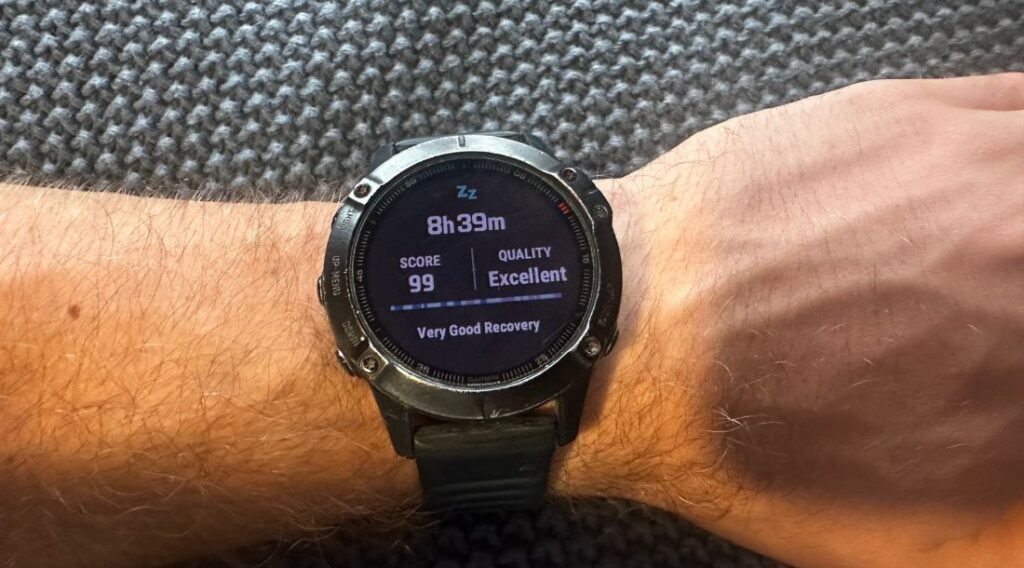
Tracking can be as simple as recording when you went to bed, roughly how long you took to fall asleep, when you woke and how you felt during the day.
Wearables such as Garmin, Fitbit, WHOOP, Apple Watch and similar devices estimate sleep using movement and optical sensors that detect changes in your pulse. They infer sleep stages from these signals rather than measuring brain activity. (10)
While wearables don’t match clinical sleep studies for exact sleep stages, total sleep time, or brief wakeups, they are noticeably better at spotting deep and REM sleep than light sleep.
Even with some stage misclassification, they remain a great, accessible tool to track general recovery trends and data over time. (10)
Some wearables also estimate heart rate variability (HRV), the variation in time between consecutive heartbeats. It reflects how your nervous system regulates your heart, which can change with training, sleep and stress.
This makes HRV useful as one indicator of how you’re coping overall. Look at trends against your own usual range and then consider them alongside your sleep, recent training and how you feel. (11)
Tip:
Even the highest-performing wearables still fall short of clinical-grade scoring.
Build Habits That Support Sleep
Use this checklist to make your sleeping environment and evening routine work for you.
Start with the changes you need most. (12) (13)
| Sleep habit | What to do | Make it easier to repeat |
| Keep regular hours | Choose bed and wake times that allow enough sleep. | Plan early training around this; move a session if it keeps cutting sleep short. |
| Get daylight | Get outside for morning daylight to help regulate your body clock. | Combine it with a walk or light exercise. |
| Keep the room cool, dark and quiet | Adjust bedding, airflow, light and noise so you’re comfortable. | Set up a fan, blinds, an eye mask or earplugs before bedtime. |
| Put the phone away | Stop scrolling and checking messages during your wind-down. | Use Do Not Disturb and charge it out of reach. For guided audio, turn the screen off. |
| Have a wind-down time | Spend the last 30–60 minutes on quiet activities with dimmer lights. | Set a reminder to finish work and start the same short routine. |
| Settle a busy mind | Try gentle stretching, meditation or writing down tomorrow’s tasks. | Leave a notebook or book ready. Choose something you actually enjoy. |
| Check caffeine and alcohol | Keep caffeine earlier and reduce alcohol near bedtime. | Check the caffeine in your pre-workout; try alcohol-free evenings if sleep is disrupted. |
| Allow time after training | Give yourself time to eat, shower and settle before bed. | If late sessions keep you awake, try moving harder training earlier. |
400 mg of caffeine in one dose can disturb sleep even 12 hours before bed. For comparison, a single espresso shot contains roughly 60–100 mg, depending on the coffee. Smaller doses generally have less effect, but sensitivity varies. (14)
To turn this into a habit, work backwards from your bedtime. For example, with a 9 pm bedtime, finish tomorrow’s preparation by 8 pm, put the phone away, dim the lights and spend the remaining time reading, stretching or journalling. Choose two steps to repeat this week, then adjust based on how you sleep.
If you’re lying awake getting frustrated, get up for a quiet activity in dim light and return when sleepy. Trying to force sleep can keep you awake. (13)
Naps and Non-Sleep Deep Rest
Naps:
Yes, naps can help. They can reduce fatigue and improve alertness and some aspects of exercise performance, even after a normal night’s sleep. Benefits vary, and a nap may only partly ease the effects of a short night. (15) (16)
Start with 15–30 minutes in the early afternoon. Longer naps can be useful when you have time, but may leave you groggy afterwards, known as sleep inertia. Allow time to become fully alert before training. (17) (15)
If naps make falling asleep at night harder, move them earlier, shorten them or leave them out. Keep enough night-time sleep as the priority. (17)
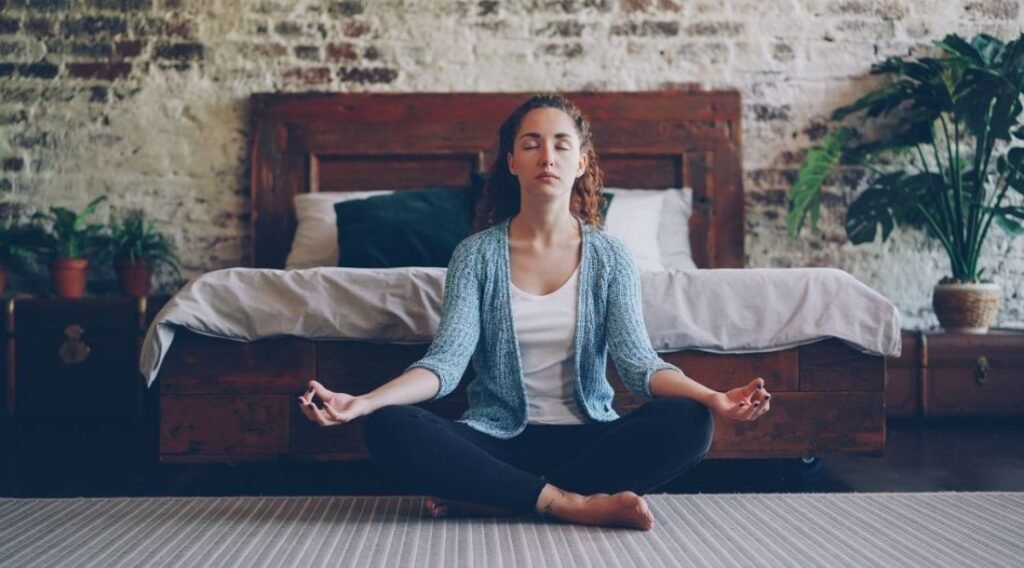
Non-Sleep Deep Rest (NSDR):
NSDR uses guided breathing and a body scan to help you relax. Andrew Huberman popularised the term, drawing on practices such as yoga nidra. (18)
It may help you feel calmer, less fatigued and more recovered. Improvements in concentration and physical performance are less consistent, and benefits aren’t guaranteed every time. (19) (20)
I quite like using NSDR; I find it’s a good reset when I feel overwhelmed or tired but don’t have time to sleep/nap. I either feel ready to go again after the 10- 20 mins, or if I’m past my point of exhaustion, it’ll put me to sleep.
It’s worth trying when you want to rest but don’t feel like napping.
After a poor night, it may help you unwind, but we cannot yet say it restores the training performance or physical recovery lost through insufficient sleep. (19) (20)
Try it:
Follow Huberman’s free 10-minute NSDR recording on YouTube. Find somewhere quiet, get comfortable and follow the audio.
Is This for You?
If you train regularly, give sleep and nutrition a place in your planning. Allow enough time for sleep and choose two habits from the checklist to practise this week.
One poor night doesn’t automatically mean cancelling training. Start with an easy warm-up and pay attention to perceived effort– how hard exercise feels, which can increase after sleep loss.
If your usual pace or load feels unusually demanding, reduce the intensity or shorten the session. If you’re struggling to stay alert, prioritise rest, especially before road cycling or swimming.
If unusual daytime sleepiness continues despite enough opportunity to sleep, or sleep problems persist, speak with your GP.
References
- Kong, Y., et al. (2025). Effects of sleep deprivation on sports performance and perceived exertion in athletes and non-athletes: a systematic review and meta-analysis. Frontiers in Physiology, 16, 1544286.
- Saner, N. J., et al. (2020). The effect of sleep restriction, with or without high-intensity interval exercise, on myofibrillar protein synthesis in healthy young men. The Journal of Physiology, 598, 1523–1536.
- Schmid, D., et al. (2020). Sleep-dependent motor memory consolidation in healthy adults: A meta-analysis. Neuroscience & Biobehavioral Reviews, 118, 270–281.
- National Institute of Neurological Disorders and Stroke. Understanding Sleep: Brain Basics. Official educational guidance.
- Solano, A., et al. (2024). Sleep Consolidation Potentiates Sensorimotor Adaptation. The Journal of Neuroscience, 44(36), e0325242024.
- Walsh, N. P., et al. (2021). Sleep and the athlete: narrative review and 2021 expert consensus recommendations. British Journal of Sports Medicine, 55, 356–368.
- Watson, N. F., et al. (2015). Recommended Amount of Sleep for a Healthy Adult: A Joint Consensus Statement of the American Academy of Sleep Medicine and Sleep Research Society. Sleep, 38, 843–844.
- Choudhary, P. K., et al. (2026). Effects of sleep manipulation on athletic performance, cognitive function, and recovery: a systematic review of experimental studies. BMC Sports Science, Medicine and Rehabilitation. Accepted manuscript, published 3 November 2026.
- Sletten, T. L., et al. (2023). The importance of sleep regularity: a consensus statement of the National Sleep Foundation sleep timing and variability panel. Sleep Health, 9(6), 801–820.
- Schyvens, A.-M., et al. (2025). A performance validation of six commercial wrist-worn wearable sleep-tracking devices for sleep stage scoring compared to polysomnography. SLEEP Advances, 6(2), zpaf021.
- Gronwald, T., Schaffarczyk, M., Reinsberger, C., & Hoos, O. (2024). Heart Rate Variability – Methods and Analysis in Sports Medicine and Exercise Science. Deutsche Zeitschrift für Sportmedizin, 75, 113–118.
- Gooderick, J., Wilson, S. M. B., & Searle, W. J. (2025). How to Enhance Sleep for Athletes? A Narrative Review of Sleep Hygiene and Sleep Extension Practices. Current Sleep Medicine Reports, 11, 28.
- Sleep Health Foundation. (2024). Sleep Hygiene: Good Sleep Habits. Australian sleep-health guidance.
- Gardiner, C. L., et al. (2025). Dose and timing effects of caffeine on subsequent sleep: a randomized clinical crossover trial. Sleep, 48(4), zsae230. Published online in 2024.
- Mesas, A. E., et al. (2023). Is daytime napping an effective strategy to improve sport-related cognitive and physical performance and reduce fatigue? A systematic review and meta-analysis of randomised controlled trials. British Journal of Sports Medicine, 57(7), 417–426.
- Boukhris, O., et al. (2026). The effects of daytime napping on psychophysiological measures in physically active individuals and athletes: A systematic review, meta-analysis, and meta-regression, with assessment of the certainty of evidence. Biology of Sport, 43, 149–163. Published online in 2025.
- Sleep Health Foundation. (2024). Napping. Australian sleep-health guidance.
- Huberman Lab. Dr. Andrew Huberman’s Guide to NSDR. Explanation and guided practice resources.
- Boukhris, O., Suppiah, H., Kerkeni, M., Holt, A., & Driller, M. (2026). Time course of perceptual, cognitive, physical and physiological responses to a single non-sleep deep rest session in physically active young adults. Applied Psychology: Health and Well-Being, 18(4), e70180.
- Boukhris, O., Suppiah, H., & Driller, M. (2026). Comparing the Effects of a Short Nap and Non-Sleep Deep Rest on Perceptual, Cognitive, and Physical Performance in Active Adults. Clocks & Sleep, 8(3), 52.