Walking can improve fitness when it is used with enough consistency, progression, and intent.
This is not just about step counts or general movement. Walking can be used in different ways to improve cardiovascular fitness, depending on how it is structured and performed.
Below, we break down the evidence and practical methods behind this, including step count and volume, walking intensity, and simple walking workout examples to try.
Table of Contents
Disclaimer: This article is for informational purposes only and is not medical advice. Individual needs and health conditions may vary.
Can You Increase Fitness With Walking?
Walking can absolutely improve multiple aspects of fitness, particularly cardiovascular endurance, stamina, mobility, and overall physical capacity.
This can be especially useful for beginners, older adults, recovery phases after injuries, and sedentary individuals.
Walking increases energy demand and raises heart rate above resting levels. Over time, this can improve aerobic fitness, endurance, and general work capacity. (1)
Research consistently shows that walking is associated with reduced cardiovascular disease risk, improved physical function, and better long-term health outcomes, even at moderate intensity and volume. (2)
Higher daily step counts are also associated with progressively lower all-cause mortality risk, although the exact point of diminishing returns appears to vary by age (more below). (3)
TIP:
Progressive overload still applies to walking. The two main adjustable variables are volume (how much you walk) and intensity (how hard you walk).
Step Count and Volume
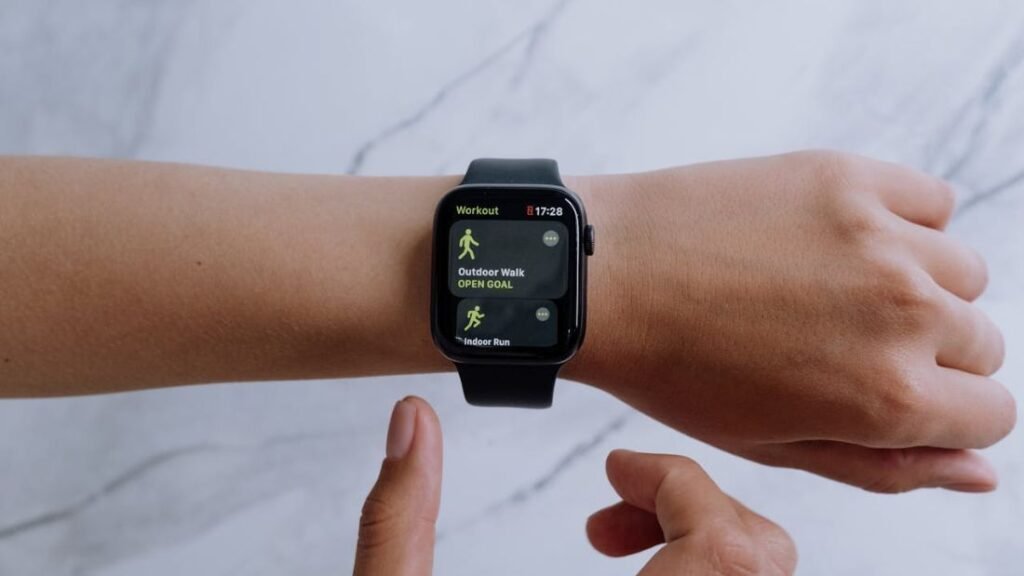
Step count and total walking volume represent your overall daily movement in addition to other exercise or training.
Based on a large meta-analysis of over 47,000 adults across four continents, the risk of early death decreases as daily step counts increase. However, the benefit does not continue rising at the same rate indefinitely. (3)
Improvements begin to plateau at around:
Adults aged 60+ :
- 6,000 – 8,000 steps per day
- Roughly 4-6 km total, or around 1-1.5 hours of movement throughout the day.
Adults under 60 :
- 8,000 – 10,000 steps per day
- Roughly 6-8 km total, or around 1.5-2 hours of walking throughout the day.
At the same time, there is nothing wrong with exceeding these ranges. Higher step counts are still beneficial, especially when they fit naturally into someone’s lifestyle, job, or training routine.
Step count is best understood as a guide for total daily movement rather than a strict target, as it does not take into account intensity or other forms of activity such as cycling, swimming, or structured training sessions, which may not increase step count yet still improve fitness.
Interestingly, newer research on Vigorous Intermittent Lifestyle Physical Activity (VILPA) found that in adults who reported no structured exercise, even very short bursts of higher-intensity daily movement were associated with meaningful health benefits. (4)
Some benefits were seen from as little as 3-5 minutes total per day, accumulated through brief 1 min bursts such as fast walking throughout the day. This reinforces how important intensity and daily movement are, especially from a low fitness baseline. (5)
TIP:
The popular “10,000 steps per day” idea originated from a marketing campaign for a wearable pedometer released in the wake of the 1964 Tokyo Olympics, and it has since been adopted into the fitness world and mainstream media. (6)
Walking Intensity

Walking intensity refers to how physically demanding the walk is.
Two people can complete the same number of steps but get very different training effects depending on pace, incline, effort and level of existing fitness.
Higher intensity walking increases heart rate, breathing rate, and muscular demand, which is what drives most of the cardiovascular improvement.
One study on interval walking in middle-aged and older adults found that alternating between fast and slow walking significantly improved aerobic fitness, with improvements mainly driven by time spent at higher intensity rather than total walking time. (7)
Another study comparing walking patterns found that breaking walking into shorter, higher-effort bouts across the day can be just as effective, or more effective, than one longer, easy walk, which is similar to VILPA. (2)
TIP:
Those times when you’re running late and speed walking to catch the bus, it’s actually beneficial.
Walking Workout Examples
Walking intensity does not need to make your walk more complicated or less enjoyable.
The goal is simply to make the same activity slightly more demanding so it produces greater fitness benefits over time, without turning it into a difficult type of training.
| Method | Example | What It Does |
| VILPA / Short Vigorous Efforts | 30-60 seconds of fast walking, stairs, or uphill walking performed 5-8 times throughout the day (roughly 3-6 total minutes) | Very short bursts of higher-intensity movement may still provide meaningful long-term health and fitness benefits, particularly in previously inactive individuals. |
| Interval Walking | 3 minutes fast + 3 minutes easy X 5 sets = 30 minutes | Alternates effort and intensity to increase cardiovascular demand while allowing short recovery periods. |
| Multiple Short Walks | 10 minutes brisk X 3 per day = 30 minutes | Breaks walking throughout the day into short and effective sessions. |
| Continuous Brisk Walk | 20-40 minutes at a steady brisk pace | Improves cardiovascular endurance and general work capacity. |
| Incline / Hill Walking | 15-30 minutes uphill, treadmill incline, or interval-style up-and-down hill walking | Increases intensity and muscular demand without needing to walk faster. |
| Increasing Duration | A consistent 30-60 minute walk done regularly with progression | Increases total walking volume and endurance over time. |
| Different Terrain | Uneven trails, hiking tracks, rocks, mud, or sand | Increases demand for coordination, agility, balance, and stability. |
| Rucking / Carrying Weight | Any of the above methods using a backpack or a weighted vest | External load can further increase walking difficulty and intensity. Best suited to those with an existing fitness base rather than beginners. |
TIP:
Start at the top of the table and progress down as your fitness improves. The goal is a sustained level of effort where breathing is clearly elevated.
Is This for You?
Walking is often underestimated because it is simple, but consistent walking with enough intent and progression can meaningfully improve cardiovascular fitness, physical function, and long-term health.
At the same time, walking alone is unlikely to maximise strength, endurance, mobility, athletic performance, or higher-level cardiovascular fitness. This is where broader training becomes important.
When you are ready to build a more complete lifelong fitness approach, see: How to Train for Lifelong Fitness
Walking works best as part of a long-term approach to fitness because it is accessible, sustainable, and easy to recover from.
With enough of a challenge and a bit of consistency, it can be a strong place to start.
Have any questions or suggestions? Feel free to contact us here.
References
- Morris, J. N., & Hardman, A. E. (1997). Walking to health. Sports Medicine, 23(5), 306–332.
https://pubmed.ncbi.nlm.nih.gov/9181668/ - Murphy, M., Nevill, A., Neville, C., Biddle, S., & Hardman, A. (2002). Accumulating brisk walking for fitness, cardiovascular risk, and psychological health. Medicine & Science in Sports & Exercise, 34(9), 1468–1474.
https://pubmed.ncbi.nlm.nih.gov/12218740/ - Paluch, A., Bajpai, S., Bassett, D., et al. (2022). Daily steps and all-cause mortality: a meta-analysis of 15 international cohorts. The Lancet Public Health, 7, e219–e228.
https://www.thelancet.com/journals/lanpub/article/PIIS2468-2667%2821%2900302-9/fulltext - Koemel, N. A., Ahmadi, M. N., Biswas, R. K., Thøgersen-Ntoumani, C., Teixeira-Pinto, A., Chow, C. K., Harezlak, J., & Stamatakis, E. (2026). Vigorous intermittent lifestyle physical activity (VILPA) and mortality risk among US adults: a wearables-based national cohort study. The international journal of behavioral nutrition and physical activity, 23(1), 17. https://pubmed.ncbi.nlm.nih.gov/41612409/
- Stamatakis, E., Ahmadi, M. N., Friedenreich, C. M., Blodgett, J. M., Koster, A., Holtermann, A., Atkin, A., Rangul, V., Sherar, L. B., Teixeira-Pinto, A., Ekelund, U., Lee, I. M., & Hamer, M. (2023). Vigorous Intermittent Lifestyle Physical Activity and Cancer Incidence Among Nonexercising Adults: The UK Biobank Accelerometry Study. JAMA oncology, 9(9), 1255–1259. https://pubmed.ncbi.nlm.nih.gov/37498576/
- Calechman, S. (2019, July 11). 10,000 steps a day — or fewer? Harvard Health Publishing.
https://www.health.harvard.edu/blog/10000-steps-a-day-or-fewer-2019071117305#:~:text=Dr.%20Lee%20discovered%20that%20the%20origins%20of%20the%20number%20go%20back%20to%201965%2C%20when%20a%20Japanese%20company%20made%20a%20device%20named%20Manpo%2Dkei%2C%20which%20translates%20to%20%E2%80%9C10%2C000%20steps%20meter.%E2%80%9D - Masuki, S., Morikawa, M., & Nose, H. (2019). High-Intensity Walking Time Is a Key Determinant to Increase Physical Fitness and Improve Health Outcomes After Interval Walking Training in Middle-Aged and Older People. Mayo Clinic Proceedings, 94(12), 2415–2426.
https://pubmed.ncbi.nlm.nih.gov/31477320/
Share this article: