Figuring out how much protein you eat can be tricky, and missing your daily target happens more often than you think. That’s where Protein Maths comes in.
This guide shows you exactly how to hit your daily protein needs, break them into simple protein blocks, and estimate protein in the foods you already eat.
A practical, everyday system you can use to hit your protein goal without overthinking it or using complicated formulas.
Table of Contents
Protein Essentials
Covered in our last post, Protein Essentials: What, When, and How Much, we covered the science: what protein is, why your body needs it, when it’s useful around training, and the evidence-backed ranges for daily intake.
If you haven’t read it yet, it’s worth going through. It provides full context and helps you understand why your number matters, especially since protein needs shift with age, sex, and how hard you train.
For this Protein Maths guide, we’re using 1.6 grams of protein per kilogram of body weight per day as a safe, research-backed average. It’s simple, reliable, and works for most people.
Tip:
Your total daily protein matters far more than perfect timing.
How to Apply It: Protein Maths in Action
How you eat your food is up to you; the important part is hitting your protein goal.
This is where the real Protein Maths comes in. It takes all the research from Protein Essentials and turns it into a practical framework focused on awareness, estimating protein, and building repeatable habits.

Step 1: Know Your Daily Minimum Target
Short checklist:
- Calculate: body weight (kg) x 1.6 (g) = your daily protein goal (g)
- Round to the nearest 5-10 g
- Memorise or write down that number. It’s your daily protein goal.
We’re using 1.6 g/kg/day as the target here, a simple, research-backed, and safe average to aim for. There are several caveats and varying amounts that one could aim for, and you can find more information here.
If you want to nudge it up for heavy training or a strict calorie cut, that’s fine too.
Examples 1.6g/kg/day :
- 50 kg → 80 g/day
- 60 kg → 96 g/day
- 70 kg → 112 g/day
- 80 kg → 128 g/day
- 90 kg → 144 g/day
- 100 kg → 160 g/day
Example in practice:
A 60 kg person calculates 96 g/day and rounds that up to 100 g/day, easy to remember and simple to work with.
Step 2: Break It Up (Your Daily Protein Blocks)
How you split your protein is completely flexible: 3 meals, 5 meals, big eater, small eater, snacker… it all works.
The goal is to make your daily target easier to hit.
The easiest way to do that is to use protein blocks per meal, which is just a decent serving of a complete protein.
Protein Blocks:
- 20-30 g per main meal
- ~10 g per snack
- Or divide up, e.g., ⅓ of your total daily target if you only eat three main meals.
This takes the pressure off counting everything perfectly. Once you know roughly how much protein is in the foods you eat often, you’ll hit your daily number almost on autopilot.
You can also eat your protein in one or two big meals, that’s fine too. Total daily intake is the priority; breaking it up is just slightly more optimal for muscle protein synthesis.
If you struggle to hit your daily protein target and want a convenient, tasty option, protein powders can be a useful tool. For choosing the right one, see our guide; how to choose the right protein powder.
Example:
A 60 kg person aims for 100 g/day.
Three meals = ~30 g per meal, then top up with a snack or two for the remaining grams. Simple, repeatable, and hard to mess up.
(more practical examples listed below)
Step 3: Estimate Protein in Common Foods
Now the fun part of protein maths: once you repeat the same food combos and use protein blocks, estimating protein becomes second nature.
Even new foods are easy to check, though eating out can be a little trickier.
Here are the best ways to estimate protein:
1. Google Search
Look up the protein content of food: “how much protein in [food]”.
- Estimate the portion you actually ate.
- Example: Cooked 500 g lean mince, you ate ⅓ → search: “how much protein in cooked 166 g lean mince”.
Tip:
Protein varies with cooking, fat %, and brand, Google gives a ballpark, and that’s often good enough.
2. Read the Packet
Check the nutrition label for protein per serving and estimate based on how much you ate.
- Easy: 1 tbsp peanut butter = 5 g protein
- Less obvious: 100 g yogurt in a 1kg tub → weigh once or look at the servings per container and divide it up. Then learn to eyeball it.
Tip:
This is my simplest method for staying consistent without apps and still my go to after doing this for the past year.
3. Use AI
AI tools (like ChatGPT) can estimate protein levels over a full day. Give as much detail as possible: foods, serving sizes, and your daily target.
- Example prompt: “I’m 60 kg, aiming for 100 g protein today. Here’s what I ate: breakfast …, snack …, lunch …, snack …, dinner … Can you please give me protein per meal and total?”
Tip:
The more precise your info, the more accurate the estimate.
4. Apps
Classic option: MyFitnessPal or similar. Scan barcodes or manually enter foods.
- Useful if tracking both total calories and protein.
Tip:
Round down the protein on labels slightly for consistency.
Practical Protein Examples
Even similar foods can have very different protein amounts.
That’s why it’s worth checking your staples, especially for everyday items. Here are a few examples:
Protein in Common Milks (per 250 ml):
| Milk Type | Protein |
| Full cream cow milk | 8 g |
| Light cow milk | 8 g |
| Soy milk | 7 g |
| Oat milk | 1.3–2 g |
| Almond milk | 1.4–2 g |
| High-protein milk | 10–15 g |
Protein in Common snacks:
| Protein Snack (5-10 g Protein) | Notes / Tips |
| 1 boiled egg | ~6g of protein, easy meal prep |
| 2 tbsp peanut butter | ~8g of protein, Higher fat, watch extra calories |
| 1 small handful of mixed nuts | ~6g of protein, depending on the nut mix, |
| ½ cup edamame (vegan) | ~9g of protein, plant-based, complete protein |
| 1 slice cheese | ~5g of protein, easy, simple |
| 1/3 cup cottage cheese | ~10g of protein, High protein snack |
| 100 g Greek yoghurt | ~10 g of protein per 100 g serving |
Tip:
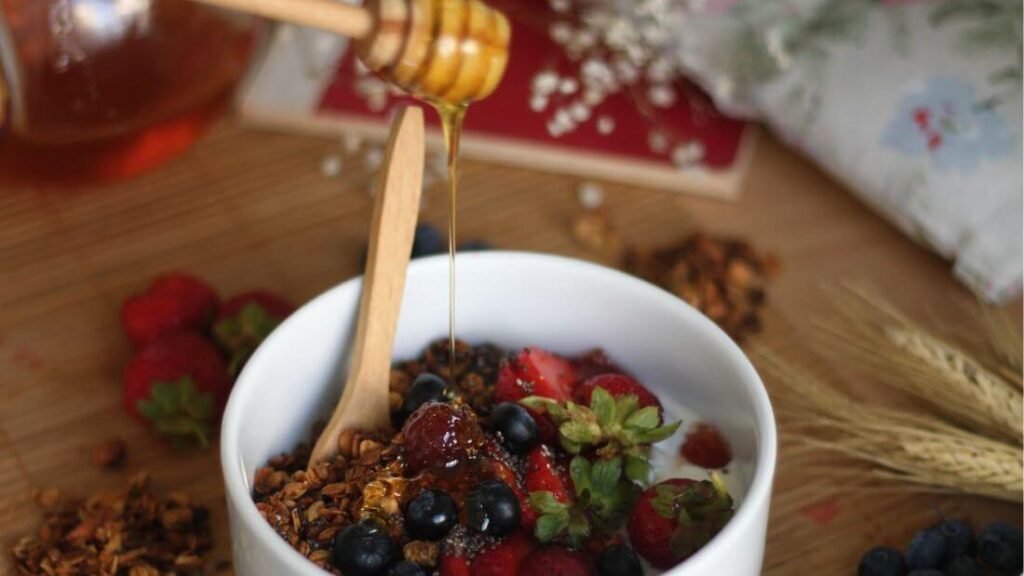
Adding syrup, honey, or sweaters to protein snacks boosts calories more than protein. Great if you need extra carbs for hard training, less ideal for weight loss or maintenance. As the protein-per-calorie ratio drops
Protein Block Examples:
| Protein Block | Examples (Approx.) |
| 10 g Protein | 2 cooked eggs 1 tbsp peanut butter + 2 slices wholemeal bread 100g Greek yoghurt + small handful nuts 1 glass of high-protein milk 1/2 cup cooked lentils (vegan) 1/2 cup cooked quinoa (vegan) |
| 20 g Protein | 1 scoop protein powder with water 1 small tin of tuna + two slices of wholemeal bread 1 Protein bar (~15–20 g) 3/4 cup cooked lentils (vegan) 1 cup tofu (vegan) 1/2 cup tempeh (vegan) |
| 30 g Protein | 1/2 chicken breast 150 g cooked lean beef (approximately 1 cup) 1 medium tin of tuna (185g tin) 1-1.5 scoops protein powder with milk (~25–30 g) 200 g cooked salmon (approximately 1 fillet) 1.5 cups tofu (vegan) 1 cup tempeh (vegan) |
Is This for You?
Protein maths is for anyone who wants to actually know how much protein they’re eating and make simple, repeatable choices, without overcomplicating things.
It won’t solve every nutrition issue; you still need to consider total calories, micronutrients, and overall diet quality, but it gives you a solid start and control over one of the most important nutrients: protein.
Start by noticing the protein in your meals, estimate it, adjust as needed, and repeat the process. That’s the core of protein maths: simple, actionable, and realistic for everyday life.
Why not give it a try?
Have any questions or suggestions? Feel free to contact us here.
References & Further Reading
These studies provide insight towards the scientific basis for the strategies shared in this guide.
They focus on daily protein requirements, practical intake timing, and distribution for muscle health. Use them to understand why hitting your protein target matters and how to incorporate it into daily meals.
For a deeper dive, see our full post: Protein Essentials: What, When, And How Much.
Key studies:
- Nunes, E.A., Colenso-Semple, L. & McKellar, S.R. (2022). Systematic review and meta-analysis of protein intake to support muscle mass and function in healthy adults. Journal of Cachexia, Sarcopenia and Muscle, 13(2), 795–810. Supports protein intake of 1.6 g of protein/kg/day.
Read the full study
- Witard, O.C., Hearris, M. and Morgan, P.T. (2025). Protein Nutrition for Endurance Athletes: A Metabolic Focus on Promoting Recovery and Training Adaptation. Sports Medicine. Supports daily protein targets for athletes and active individuals.
Read the full study
- Nabuco, H.C., et al. (2022). Protein supplementation and lean body mass in adults: a meta-analysis. Supports meal-wise protein estimates and protein block strategy
Read the full study
- Morton, R.W., et al. (2018). A systematic review, meta-analysis and meta-regression of the effect of protein supplementation on resistance training-induced gains in muscle mass and strength in healthy adults. British Journal of Sports Medicine, 52(6), 376–384. Supports protein intake and its timing.
Read the full study
- Schoenfeld, B.J. & Aragon, A.A. (2018). How Much Protein Can the Body Use in a Single Meal for muscle-building? Implications for Daily Protein Distribution. Journal of the International Society of Sports Nutrition, 15(1). Supports practical protein timing and distribution.
Read the full study
Share: