Sport and fitness supplements are widely used, heavily marketed, and often misunderstood. They’re meant to support your training, not replace it or reduce it.
This guide explains which common supplements can meaningfully support your fitness, health, recovery, or performance.
We cover what works, what they do, and typical recommended amounts, so you can finish with a clear idea of which ones might actually be useful for you.
Table of Contents
Disclaimer: This article is for informational purposes only and is not medical advice. Individual needs and health conditions may vary.
What Are Supplements: In a Fitness Context
Most fitness supplements work by:
- Increasing the availability of a nutrient already used by the body or one that is needed.
- Reducing practical barriers (time, appetite, access to food).
- Supporting performance indirectly, through recovery, fatigue management, or hydration.
In a practical sense, a sport or fitness supplement is a product used to support nutrition and training.
Often addressing specific needs such as correcting nutrient gaps, providing convenient forms of energy or micronutrients, or offering direct or indirect support for performance and recovery. (1)
Their effects are generally safe, have a small to moderate increase in performance, are context-dependent, and are additive rather than transformative. (1,2)
TIP:
Supplements seem to have measurable but limited effects compared with training load, energy intake, and recovery behaviours.
Common Fitness Supplements:
Supplements can be a useful resource, meant to support an existing training and nutrition base.
The key question is whether a supplement’s role aligns with your training goals, recovery or health needs, or performance priorities.
The supplements listed below are among the most common and have consistent evidence of safety and effectiveness in healthy, physically active populations.
This table shows a summary of each and more details on each one below:
| Supplement | Benefits | Recommended Usage | Note |
| Protein Powder | Helps meet daily protein targets when appetite, time, or food access is limited. | 1-2 servings per day to help reach total daily protein of 1.6 g/kg/day. | Useful for recovery and adaptation, if protein needs aren’t already met. |
| Creatine Monohydrate | Supports repeated high-intensity efforts, strength, power, lean mass, and training tolerance. | 3-5g per day or a loading phase of 20g for 5-7days then back to 5g per day. | The most effective, safe, and affordable form is Monohydrate. |
| Caffeine | Situational boost for alertness, perceived effort, and endurance/resistance performance. | Up to 400 milligrams per day or 3-6 mg per kg of body weight. | Best used strategically; effects vary by dose, tolerance, and timing. |
| Electrolytes | Helps maintain hydration, nerve conduction, and muscle function during long, hot, or high-sweat sessions. | Use when exercise exceeds ~60-90 minutes. | Situational; generally unnecessary for shorter or lower-intensity sessions. |
| Micronutrient Supplements | Useful when a deficiency exists in vitamins or minerals, such as vitamin D, magnesium, or omega-3s. | Situation dependent, use as recommended. | Primarily health support; limited impact on performance. |
Protein Powder
Key points:
- Commonly used daily, safe and well-researched supplement.
- Helps meet daily protein targets.
- Helps with recovery and gains.
- Many different types and flavours available.
- Useful in many scenarios; whenever a high protein amount is required.
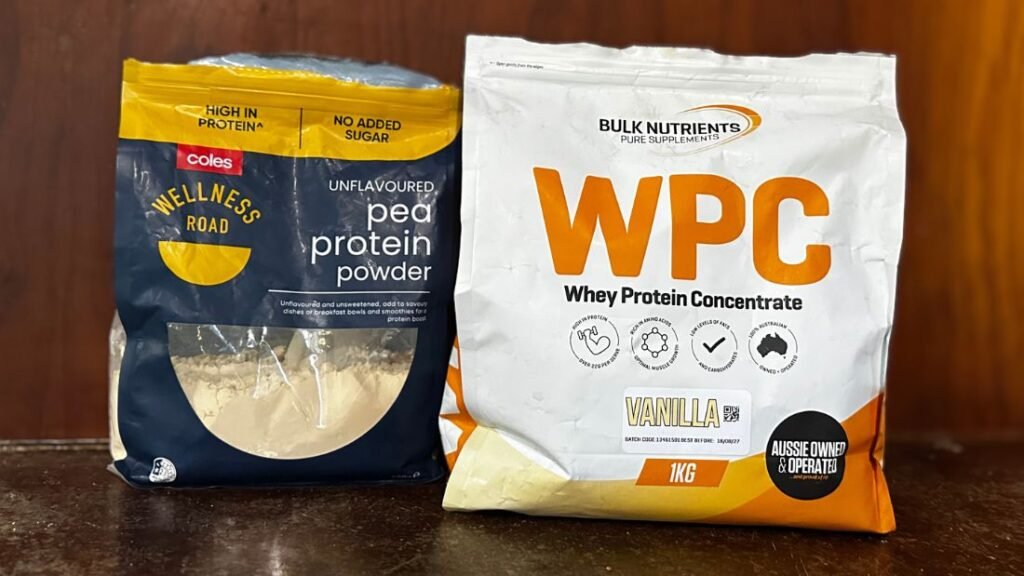
Protein powder is a practical nutrition supplement, not a direct performance enhancer, though it can indirectly support recovery.
Adequate protein of 1.6 grams of protein per kilogram of body weight per day for most active adults supports muscle repair, adaptation, and recovery. Protein powder can be a practical way to reach this daily amount.
For more details on what, when, and how much protein to consume, see our Protein Essentials guide.
In Australia, most reputable protein powders are generally safe, tested, and widely consumed.
For details on safety, ingredients, and choosing a reliable brand, see our guide How to Buy Protein Powder in Australia, where we covered that thoroughly.
TIP:
Total daily protein is far more important than specific protein timing.
Creatine Monohydrate
Key points:
- Popular and extensively researched supplement
- Improves training adaptations and high-intensity work
- May support training tolerance and reduce injury risk
- May support memory, focus, and reduce mental fatigue
- Safe and effective with long-term use
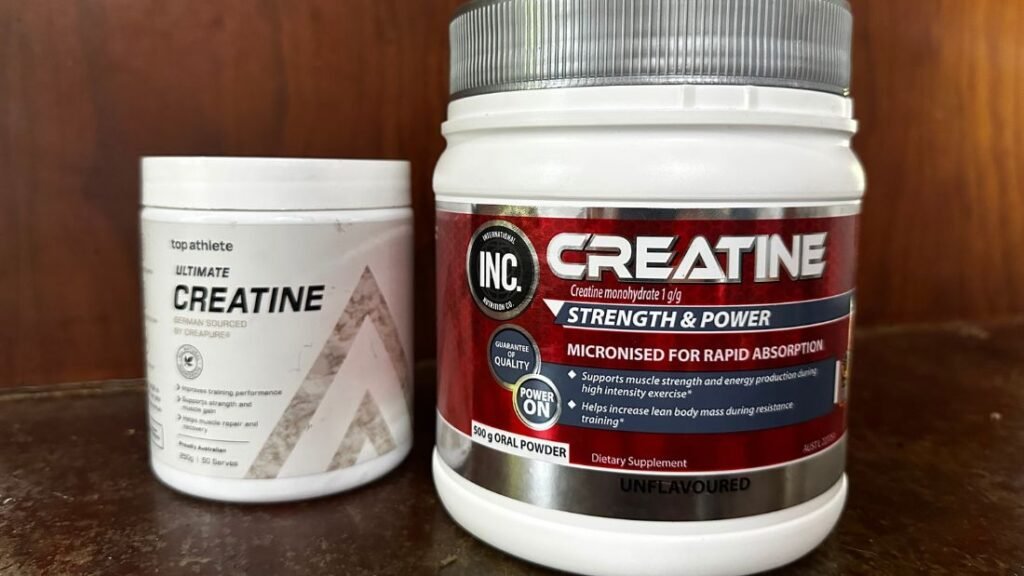
Creatine monohydrate is a specific type of creatine that is the most researched and best-supported form of creatine in terms of effectiveness, safety, and cost. (3)
It is widely used, and its effects are clear; supplementation with creatine typically increases muscle creatine and phosphocreatine stores by approximately 20–40%, a change large enough to influence performance and training outcomes meaningfully. (4, 5, 6)
Creatine is a naturally occurring compound found in animal-based foods such as red meat and fish. Typical diets provide only small amounts, making it impractical to reach the effective intake of 3-5 g/day through food alone. (7, 4)
Creatine improves the ability to perform repeated high-intensity efforts. Over time, this allows more total work to be completed during training, which supports small but meaningful increases in strength, power, and lean mass. (8)
Creatine may support recovery and training tolerance indirectly by helping sustain heavier training loads over time. (4)
Beyond physical performance, evidence suggests that creatine may support cognitive function, including memory, attention, and reduced mental fatigue. (9)
TIP:
Particularly relevant for vegetarians and vegans who tend to have lower baseline muscle creatine stores.
Caffeine

Key points:
- One of the most researched performance supplements
- Improves alertness and reduces how hard effort feels
- Can improve endurance and strength performance
- Effects depend on dose, timing, sleep, and tolerance
- Useful when used deliberately, harmful when overused
Caffeine works best when used on purpose. It doesn’t build fitness or strength on its own; it temporarily helps you feel more awake and makes effort feel easier.
Research consistently shows caffeine improves alertness, reaction time, and mental focus, even in well-rested people. (10,11)
During exercise, caffeine lowers perceived exertion, meaning the same workload feels less taxing. This can translate into better endurance, high-intensity, and resistance training performance for many people. (12,13)
Performance benefits are most commonly observed with doses around 3–6 mg per kg of body weight, typically taken before training, though individual responses vary based on tolerance and habitual intake. (14,12)
Caffeine’s benefits are highly context-dependent. Regular use can reduce its effectiveness, and intake later in the day can impair sleep quality (14)
TIP:
To use caffeine’s effects without compromising sleep quality try to limit consumption to ~6hrs before you want to sleep.
Electrolytes
Key points:
- Essential for fluid balance, nerve signalling, and muscle contraction
- Losses increase substantially with sweating
- Can help maintain hydration and performance during prolonged or hot exercise
- Most useful for long, intense sessions or high sweat rates
- Often unnecessary for short or low-intensity training
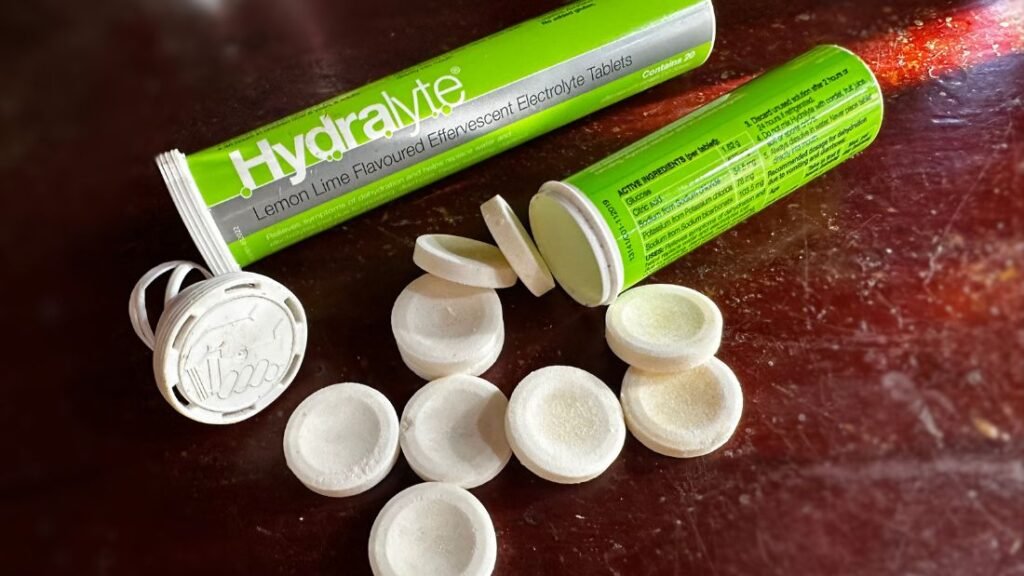
Electrolytes (primarily sodium, potassium, chloride, magnesium, and calcium) are minerals that help regulate fluid balance, nerve conduction, and muscle contraction. (15)
Sodium is the dominant electrolyte lost in sweat and plays the largest role in maintaining blood volume and hydration during exercise. (16,15)
During prolonged or high-intensity exercise, especially in hot environments, sweat losses can be substantial. Fluid replacement without adequate sodium may reduce water retention.
(15,17)
Supplements that are electrolyte-containing mixes can help maintain hydration status and support endurance performance during long-duration exercise, particularly when sweat rates are high or environmental heat stress is present. (18)
Performance benefits are most apparent when exercise exceeds ~60–90 minutes or when fluid losses are large. (19)
For a more detailed explanation on this, see our guide, Hydration Essentials For Training: Water & Electrolytes
TIP:
Sodium is often consumed from salt whereas potassium and magnesium from whole food sources.
Micronutrient supplements
Key points:
- May support health and training when a deficiency exists
- Effects on performance are usually small or inconsistent
- Value depends heavily on diet quality and individual needs
- More relevant for long-term health than performance
Micronutrient supplements such as magnesium, vitamin D, omega-3 fatty acids, and multivitamins can be beneficial when intake is low or a deficiency is present.
In these cases, correcting low status can support general health, recovery capacity, and the ability to train consistently. (20)
For otherwise healthy individuals, large reviews show that supplementation beyond adequate intake offers limited additional benefit for fitness or performance outcomes. Their role is primarily supportive, not performance-enhancing. (21)
For a broader recommended overview of other sports supplements, see Table 1.
Is This for You?
We have no affiliation with the products listed here; this guide is based on independent research and practical use.
Supplements aren’t required for fitness; they’re a line of support that can provide additional benefits once your training, nutrition, rest, and recovery are in place.
They help reduce friction, fill gaps, and support performance or health, but they won’t replace consistent effort.
The goal isn’t to take more supplements, but to understand which ones are worth using, when to use them, and why.
Proper nutrition comes first, always. Get the basics right before adding anything else. You can find more in our Nutrition Essentials For Training guide, which covers what macros and calories are.
Have any questions or suggestions? Feel free to contact us here.
References:
- IOC consensus statement: dietary supplements and the high-performance athlete. Maughan RJ, Burke LM, Dvorak J, et al. 2018. Br J Sports Med. 52(7):439–455. doi:10.1136/bjsports-2018-099027 https://pmc.ncbi.nlm.nih.gov/articles/PMC5867441/
- The development of the US and Australian dietary supplement regulations: What are the implications for product quality? Brownie S. 2005. Complementary Therapies in Medicine. 13(3):191–198. doi:10.1016/j.ctim.2005.06.005 https://www.sciencedirect.com/science/article/abs/pii/S0965229905000555
- Efficacy of Alternative Forms of Creatine Supplementation on Improving Performance and Body Composition in Healthy Subjects: A Systematic Review. Fazio C, Elder CL, Harris MM. 2022. J Strength Cond Res. 36(9):2663–2670. doi:10.1519/JSC.0000000000003873 https://pubmed.ncbi.nlm.nih.gov/36000773/
- International Society of Sports Nutrition position stand: safety and efficacy of creatine supplementation in exercise, sport, and medicine. Kreider RB, Kalman DS, Antonio J, et al. 2017. J Int Soc Sports Nutr. 14:18. doi:10.1186/s12970-017-0173-z https://link.springer.com/article/10.1186/s12970-017-0173-z
- Sports Foods Consumption in Australia and New Zealand. 2013 Sep. Food Standards Australia New Zealand. https://www.foodstandards.gov.au/sites/default/files/publications/Documents/Sports%20Foods%20Quant%20Report.pdf
- Analysis of food supplements and sports foods consumption patterns among a sample of gym-goers in Portugal. Lopes S, Cunha M, Costa JG, Ferreira-Pêgo C. 2024. J Int Soc Sports Nutr. 21(1). doi:10.1080/15502783.2024.2388077 https://www.tandfonline.com/doi/full/10.1080/15502783.2024.2388077
- The evolving role of creatine in public health: from food-based nutrient to supplement and beyond. Ostojic SM. 2025. Public Health Nutr. 28(1):e190. doi:10.1017/S1368980025101390 https://pmc.ncbi.nlm.nih.gov/articles/PMC12722096/
- The Effects of Creatine Supplementation Combined with Resistance Training on Regional Measures of Muscle Hypertrophy: A Systematic Review with Meta-Analysis. Burke R, Piñero A, Coleman M, et al. 2023. Nutrients. 15(9):2116. doi:10.3390/nu15092116 https://pmc.ncbi.nlm.nih.gov/articles/PMC10180745/
- The effects of creatine supplementation on cognitive function in adults: a systematic review and meta-analysis. Xu C, Bi S, Zhang W, Luo L. 2024. Front Nutr. 11:1424972. doi:10.3389/fnut.2024.1424972 https://pubmed.ncbi.nlm.nih.gov/39070254/
- Effects of caffeine on alertness as measured by infrared reflectance oculography. Michael N, Johns M, Owen C, Patterson J. 2008. Psychopharmacology (Berl). 200(2):255–260. doi:10.1007/s00213-008-1202-z https://pubmed.ncbi.nlm.nih.gov/18537025/
- A review of caffeine’s effects on cognitive, physical and occupational performance. McLellan TM, Caldwell JA, Lieberman HR. 2016. Neurosci Biobehav Rev. 71:294–312. doi:10.1016/j.neubiorev.2016.09.001 https://www.sciencedirect.com/science/article/pii/S0149763416300690
- Effects of caffeine intake on muscle strength and power: a systematic review and meta-analysis. Grgic J, Trexler ET, Lazinica B, Pedisic Z. 2018. J Int Soc Sports Nutr. 15:11. doi:10.1186/s12970-018-0216-0 https://pubmed.ncbi.nlm.nih.gov/29527137/
- Caffeine and sports performance. Burke LM. 2008. Appl Physiol Nutr Metab. 33(6):1319–1334. doi:10.1139/H08-130 https://pubmed.ncbi.nlm.nih.gov/19088794/
- Caffeine and Sports Performance: The Conflict between Caffeine Intake to Enhance Performance and Avoiding Caffeine to Ensure Sleep Quality. Silva H, Del Coso J, Pickering C. 2025. Sports Med. 55(7):1579–1592. doi:10.1007/s40279-025-02245-y https://pmc.ncbi.nlm.nih.gov/articles/PMC12296924/
- Electrolytes. Shrimanker I, Bhattarai S. 2025. In: StatPearls [Internet]. Treasure Island (FL): StatPearls Publishing; Updated 2023 Jul 24. https://www.ncbi.nlm.nih.gov/books/NBK541123/
- Sweating Rate and Sweat Sodium Concentration in Athletes: A Review of Methodology and Intra/Interindividual Variability. Baker LB. 2017. Sports Med. 47(Suppl 1):111–128. doi:10.1007/s40279-017-0691-5 https://pmc.ncbi.nlm.nih.gov/articles/PMC5371639/
- Recommended Dietary Allowances: 10th Edition. National Research Council (US) Subcommittee on the Tenth Edition of the Recommended Dietary Allowances. 1989. Washington (DC): National Academies Press (US). https://www.ncbi.nlm.nih.gov/books/NBK234935/
- Rehydration during Endurance Exercise: Challenges, Research, Options, Methods. Armstrong LE. 2021. Nutrients. 13(3):887. doi:10.3390/nu13030887 https://pmc.ncbi.nlm.nih.gov/articles/PMC8001428/
- Fluids and hydration in prolonged endurance performance. von Duvillard SP, Braun WA, Markofski M, Beneke R, Leithäuser R. 2004. Nutrition. 20(7–8):651–656. doi:10.1016/j.nut.2004.04.011 https://www.sciencedirect.com/science/article/abs/pii/S0899900704001029
- Nutritional Compounds to Improve Post-Exercise Recovery. O’Connor E, Mündel T, Barnes MJ. 2022. Nutrients. 14(23):5069. doi:10.3390/nu14235069 https://pmc.ncbi.nlm.nih.gov/articles/PMC9736198/
- Vitamin and mineral status: effects on physical performance. Lukaski HC. 2004. Nutrition. 20(7–8):632–644. doi:10.1016/j.nut.2004.04.001 https://www.sciencedirect.com/science/article/abs/pii/S0899900704000929
- Dietary Supplements for Exercise and Athletic Performance. National Institute of Health. Updated April 1, 2024. https://ods.od.nih.gov/factsheets/ExerciseAndAthleticPerformance-HealthProfessional/#:~:text=Table%201%3A%20Selected%20Ingredients%20in%20Dietary%20Supplements%20for%20Exercise%20and%20Athletic%20Performance
Share with a mate: