
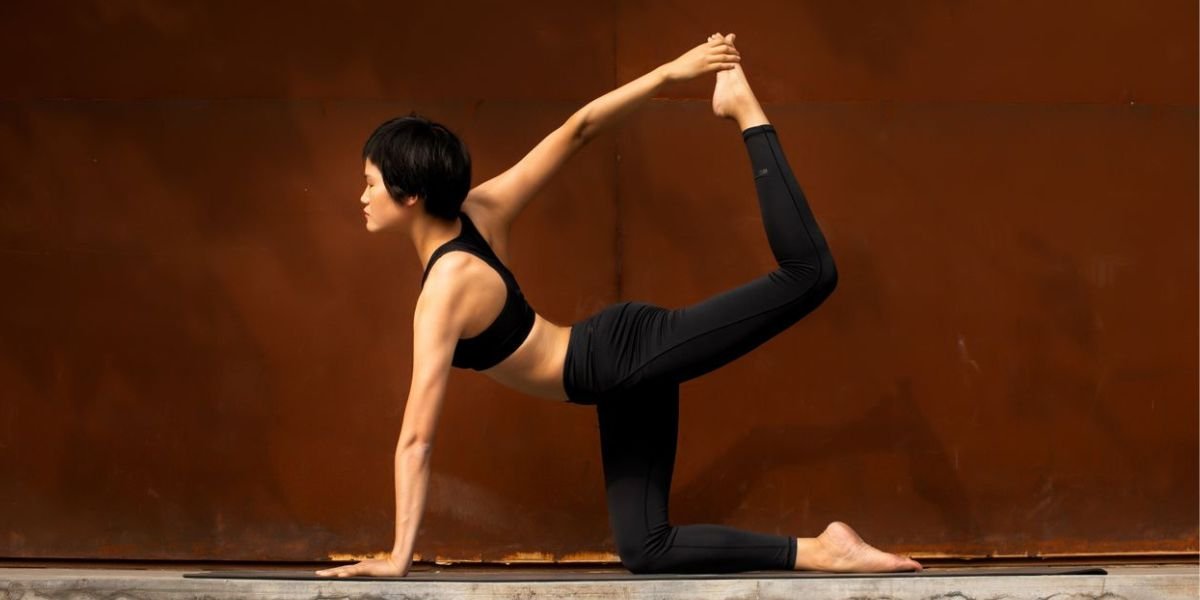
Mobility and flexibility are about how usable and comfortable your movement is. It’s a part of your overall fitness, and it’s easy to notice when it is missing.
You feel it when getting into a normal position, like a squat feels awkward, when reaching overhead feels restricted, or when getting down to the floor and standing back up feels harder than it should.
This article explains what mobility is, how it differs from flexibility, and what the combination of both looks like in real life.
Table of Contents
What Is Mobility?
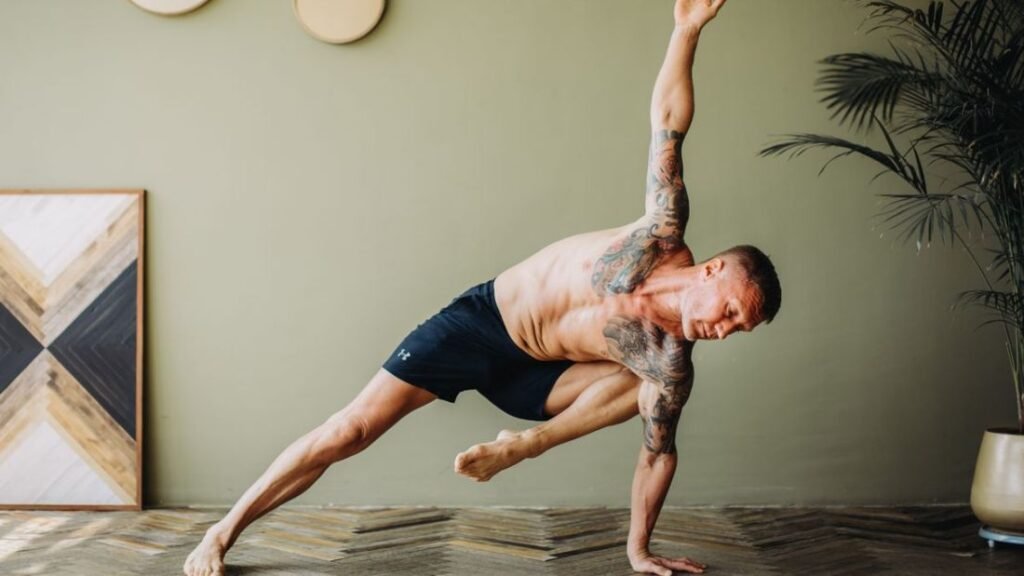
Mobility is best understood as the active range of motion, or AROM, of a joint or joint complex.
Active range of motion is the range of movement achieved when opposing muscles contract and relax to create joint movement.
In simple terms, mobility is the range you can produce through your own muscular effort, without being pushed or pulled into the position. (1)
For example, lifting your knee towards your chest using your own hip muscles shows active hip range. The same idea applies to the shoulder, ankle, spine, wrist, or any other joint.
AROM requires voluntary contraction, control, and coordination. Proprioception (body awareness) helps with this because it gives the nervous system information about body position, movement, effort, and force. (1, 2)
Tip:
Mobility is the range you can actively control and use.
What Is Flexibility?

Flexibility is the available range around a joint or group of joints.
In this article, flexibility mostly refers to passive range of motion. That means the range achieved when an outside force helps move the joint, such as gravity, a strap, your hands, a practitioner, another person, or your own body weight. (1)
For example, pulling your knee towards your chest with your hands shows passive hip range. The joint is moving further, but the movement is being assisted. Lifting that same knee using only your hip muscles would show active hip range, which is closer to mobility.
Flexibility alone does not make you your total range of motion. Range of motion can also be influenced by joint structure, bone shape, neural control, pain, balance, and other factors. (3)
Tip:
Flexibility gives you available range.
Mobility vs Flexibility
Mobility and flexibility are connected, but they are not the same thing.
The simplest difference is that mobility is active, using more strength, while flexibility is more passive.
The table below is a bit more of a comparison, showing the differences:
| Mobility | Flexibility | |
| Main idea | Active range you can control | Available range you can access |
| Range type | Active range of motion | Passive range of motion |
| Force source | Your own muscular effort | Gravity, body weight, a strap, your hands, a practitioner, or another person |
| Example | Lifting your knee towards your chest using your hip muscles | Pulling your knee towards your chest with your hands |
| What it shows | How much range you can actively use | How much range is available |
| Main limitation | Strength, control, coordination, and available range | Soft-tissue extensibility, joint structure, stretch tolerance, and other range limits |
Tip:
Flexibility gives the body an available range and mobility shows how much of that range can be actively controlled.
Adding Mobility and Flexibility
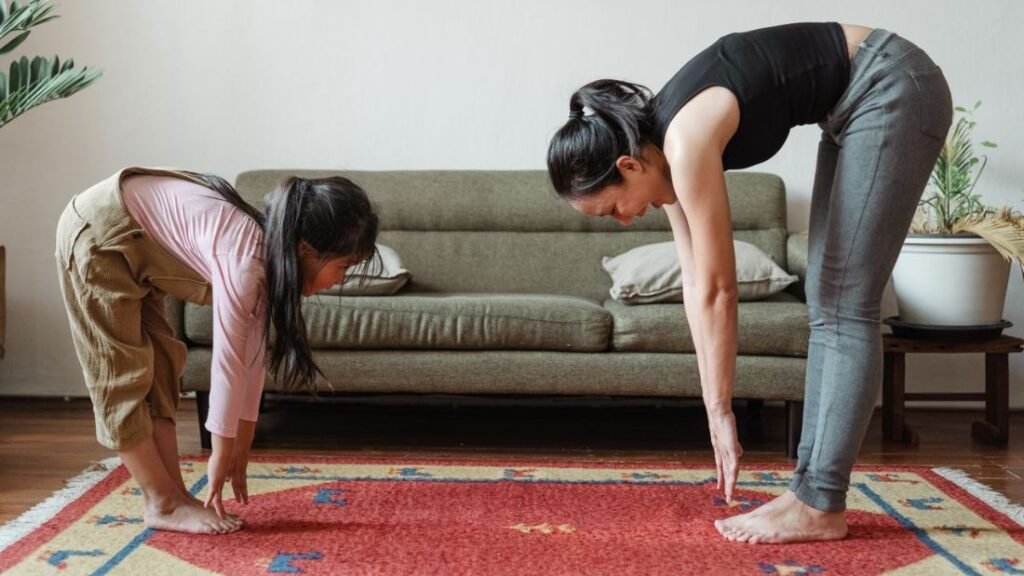
Mobility and flexibility do not need to become complicated.
Research shows that static stretching can improve flexibility, with benefits appearing from relatively small doses. Around four minutes in one session can improve short-term flexibility, and around ten minutes per week can improve flexibility over time. (4)
That does not mean every joint or person only needs ten minutes per week. It means useful flexibility work can be simple, with a few short stretches done consistently being enough to maintain or improve range for many basic needs.
Mobility can also be trained through strength and control. Research shows that strength training can improve range of motion, which supports the idea that mobility is not only built by stretching. (5)
Tip:
Pick one joint or movement to improve first. Mobility works best when it is specific, such as improving ankle range for squats, hip control for floor positions, or shoulder range for overhead movement.
Examples
For flexibility, this might mean holding a simple hamstring, hip flexor, calf, or shoulder stretch.
For mobility, this might mean training squats, lunges, split squats, overhead reaches, controlled hip movements, or other exercises through a range you can actively control.
You can also add more movement into normal life. Sitting on the floor regularly, getting down and standing back up, reaching overhead, squatting, hanging, or changing positions more often all give the body more chances to use ranges that chairs and repetitive positions often remove.
The simple approach is to use stretching when you need more available range, and use strength training or controlled movement when you need more mobility and active control.
For a simple maintenance approach, see: How to Maintain Fitness: The Minimum Effective Standards
Is This for You?
Mobility and flexibility are useful because they both help your body move better.
Flexibility gives a joint access to range and mobility shows how much of that range you can actively control and use. One is not better than the other. You need both if you want movement to feel useful, strong, and practical.
In real life, mobility and flexibility show up together when you squat, reach, rotate, kneel, climb, balance, carry, run, ride, swim, lift, work, get down to the floor, and stand back up again.
Adding more varied movement throughout the day can help as well. Sitting in the same few positions for long periods does not give your body many chances to use different ranges, so it makes sense to regularly move, stretch, stand, walk, or get down to the floor when you can.
The simple takeaway is that flexibility gives you range and mobility helps you use it.
References
- PhysioPedia. Assessing Range of Motion. Available at: https://www.physio-pedia.com/Assessing_Range_of_Motion
- Proske, U. and Gandevia, S.C. (2012). The proprioceptive senses: their roles in signaling body shape, body position and movement, and muscle force. Physiological Reviews. Available at: https://pubmed.ncbi.nlm.nih.gov/23073629/
- Behm, D.G. et al. (2026). Defining the Terms Range of Motion and Flexibility: A Call for Clarity. Sports Medicine. Available at: https://link.springer.com/article/10.1007/s40279-026-02425-4
- Ingram, L.A. et al. (2025). Optimising the Dose of Static Stretching to Improve Flexibility: A Systematic Review, Meta-analysis and Multivariate Meta-regression. Sports Medicine. Available at: https://pubmed.ncbi.nlm.nih.gov/39614059/
- Afonso, J. et al. (2021). Strength Training versus Stretching for Improving Range of Motion: A Systematic Review and Meta-Analysis. Healthcare. Available at: https://pmc.ncbi.nlm.nih.gov/articles/PMC8067745/


Pingback: How to Build a Mobility and Flexibility Routine