Creating a mobility and flexibility routine is the same whether you’re completely new to it or have started stretching occasionally. It starts with knowing what areas you want to work on and making time for it in your life.
Your routine can be as structured as a follow-along yoga session or as simple as a few movements before bed.
This guide explains how to use mobility and flexibility together, choose useful exercises, and turn them into an easy, repeatable habit.
Table of Contents
Disclaimer: This article is for informational purposes only and is not medical advice. Individual needs, injuries and health conditions may vary.
Mobility and Flexibility: How to Use Both
As covered in What Is Mobility and Flexibility?, flexibility gives you available range and mobility helps you actively control and use that range.
Flexibility work normally uses gravity, your body weight, your hands, a strap or another outside force to reach a position. Mobility work is more active and can include controlled joint movements, active stretches and strength exercises through a range you can control.
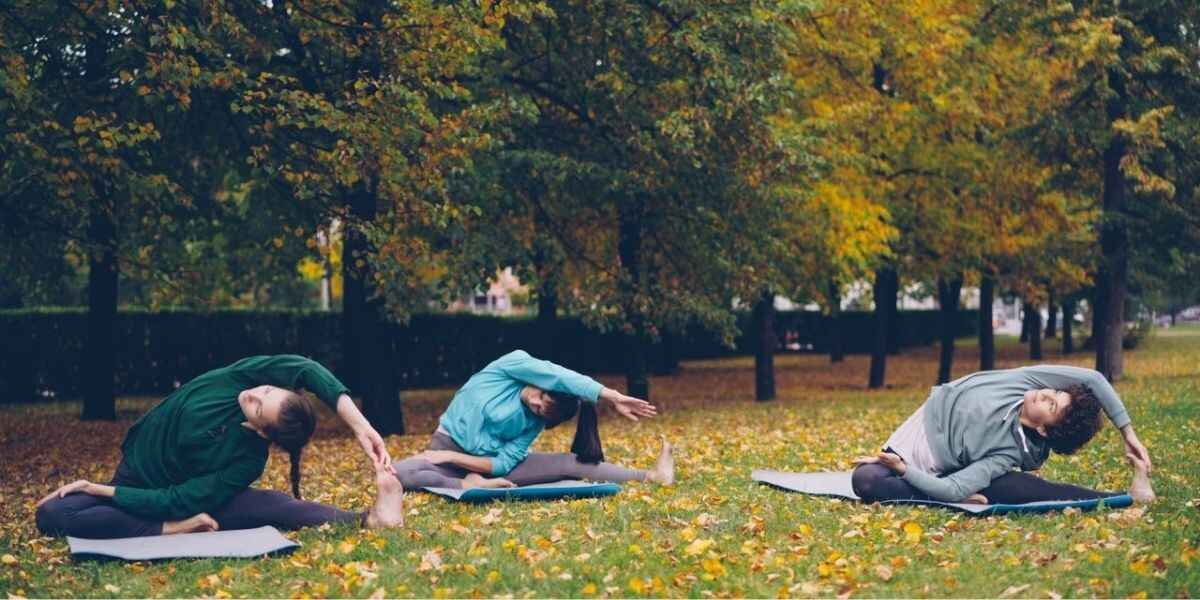
The two can be used together. A deep squat requires enough available range at the ankles and hips, but it also requires the strength and control to reach and hold the position. Yoga can also include both, using held positions for flexibility and active movement between positions for mobility, balance and control.
The simple approach is to use stretching when you want more available range and controlled movement or strength when you want to use that range more actively.
TIP:
Flexibility gives you range, mobility is how you can use it.
Choose Exercises for Your Body

Mobility and flexibility are specific to the joint and movement being trained. Flexible hamstrings do not automatically give you good ankle or hip mobility.
Choose exercises based on the positions you use, the training you do and the areas that regularly feel restricted. Running and cycling place repeated demands on the lower body, while swimming and physical work can make shoulder and upper-back movement more relevant.
Start with one or two areas and test a few movements for each. Keep the exercises that help you move through the position more comfortably or with better control.
A stretch should create manageable tension rather than sharp pain. Ongoing pain, a sudden loss of movement or a restriction following an injury needs more individual assessment than a general mobility routine can provide.
Mobility and Flexibility Exercises to Try
The table below gives a few starting options. Mobility exercises use active movement and control, while flexibility exercises use a more relaxed or assisted position.
| Body area | Mobility exercises | Flexibility exercises |
| Ankles and calves | Knee-to-wall ankle rocks, controlled calf raises | Straight-knee calf stretch, bent-knee calf stretch |
| Hips and glutes | 90/90 hip rotations, controlled hip circles | Kneeling hip-flexor stretch, figure-four glute stretch |
| Hamstrings | Active straight-leg raises, Romanian deadlifts through a comfortable range | Lying hamstring stretch with a strap, seated hamstring stretch |
| Upper back | Cat-cow, open-book rotations | Child’s pose with the arms extended, supported upper-back stretch |
| Shoulders and chest | Wall slides, controlled shoulder circles | Doorway chest stretch, supported lat stretch |
| Full body | Squat-to-stand, lunges with rotation | Relaxed yoga holds, full-body stretching sequences |
Choose two to four exercises that match what you want to work on. Move slowly through the mobility exercises and stay within a range you can control. For flexibility, hold the position at a level of tension you can relax into.
Static stretching can improve flexibility with relatively small amounts of work. In one large review, benefits did not continue increasing beyond approximately four minutes per session or ten minutes per week. (1)
Strength training through a full range can also improve range of motion. (2)
Foam rolling is another option before stretching or movement, with research finding small improvements in range and muscle soreness. (3)
Make It Easy to Repeat
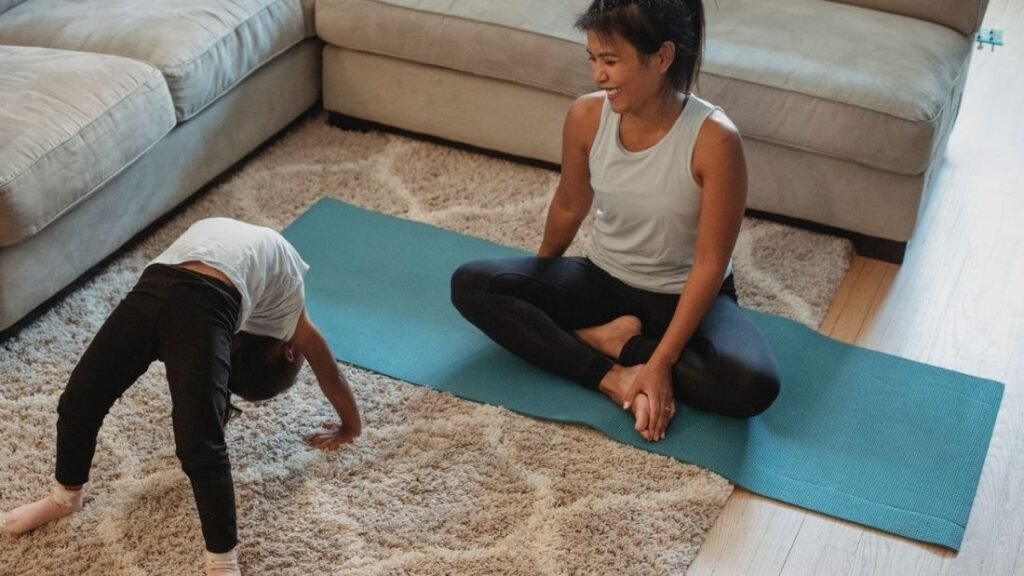
A mobility and flexibility routine becomes useful when it has a realistic time and place in your day. This could be morning yoga, active mobility before training, a few stretches after a workout or relaxed movement before bed.
For me, the habit is normally stretching before bed. As my Ironman training load has increased, I notice considerably more stiffness and soreness when I stop doing it. I noticed the same thing when my training was mainly focused on the gym.
My foam roller lives on the floor, which makes it easy to use. I put on music and work on whatever needs attention, such as my ankles after a long run or my back and hamstrings after other training. It is rarely the exact same sequence.
That familiarity takes time to build. Once you know a useful selection of exercises, you can follow a routine when you want structure or make it up based on how your body feels.
Keep the equipment accessible, save any videos you enjoy and connect the habit to something already in your day. Five useful minutes is easier to repeat than a long routine you continually put off.
TIP:
The best time is the one that makes the habit easy to repeat.
Simple Follow-Along YouTube Routines
Follow-along videos remove the need to plan a sequence and can help you learn movements to use in your own routine.
Yoga is useful here because it can include both mobility and flexibility. Slower practices with longer holds generally place more emphasis on flexibility, while flowing between positions requires more active movement, balance and control.
These few examples are ones I have personally used and have plenty of positive feedback :
10-Minute Morning Yoga — Yoga With Adriene
A short guided routine that fits easily at the start of the day.
15-Minute Full Body Mobility Routine — Tom Merrick
A direct full-body routine using more active movement and less yoga.
Yoga for Flexibility — 16-Minute Practice — Yoga With Adriene
A slower practice with more time spent stretching in different positions.
Total Body Yoga | 45-Minute Yoga Practice — Yoga With Adriene
A long version for a longer session, targeting the full body.
TIP:
Try the option that matches when and how you want to move. Repeating the same video also helps you learn the exercises, making it easier to eventually use them without following a screen.
Is This for You?
This approach is useful when you want to work on mobility and flexibility without adding another complicated training plan. You can follow the same routine, keep a list of exercises to choose from or use a mixture of both.
Start with one area, choose two or three movements and find a place for them in your day. Over time, you will learn which exercises feel useful and how to adjust the routine around your training.
The simple takeaway is to understand the difference between mobility and flexibility, know a useful selection of exercises and make them a regular part of how you move.
References
- Ingram, L.A. et al. (2025). Optimising the Dose of Static Stretching to Improve Flexibility: A Systematic Review, Meta-analysis and Multivariate Meta-regression. Sports Medicine. Read the study
- Afonso, J. et al. (2021). Strength Training versus Stretching for Improving Range of Motion: A Systematic Review and Meta-Analysis. Healthcare. Read the study
- Wiewelhove, T. et al. (2019). A Meta-Analysis of the Effects of Foam Rolling on Performance and Recovery. Frontiers in Physiology. Read the study