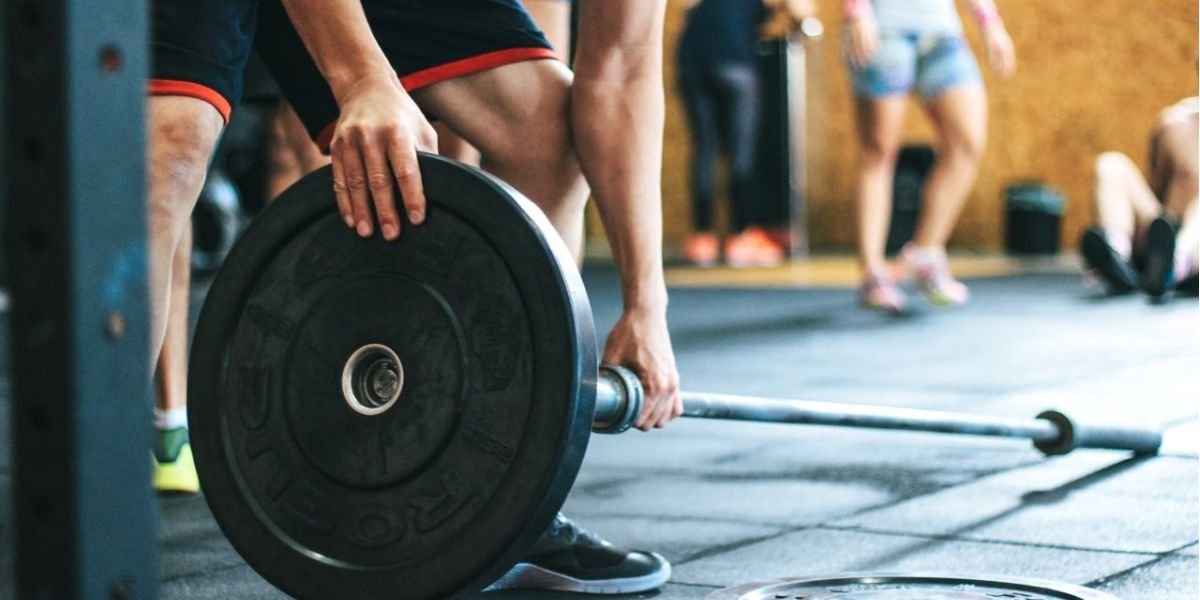
Strength training can involve weights and machines, bodyweight exercises, coached group classes, Pilates, or demanding styles of yoga.
Each option uses resistance differently. That changes how easily you can increase the challenge, which physical qualities you develop, and how the training fits into your life.
This guide compares five types of strength training, what each one does well, and the limitations to consider before choosing one.
Table of Contents
Disclaimer: This post is for general education, not medical advice. If you have an injury, illness, or health condition, speak with a doctor or physiotherapist before starting a new form of training.
What Counts as Strength Training?
Strength training is also known as resistance training.
Resistance is what your muscles work against; progressive training can improve muscle strength, hypertrophy, power, and certain components of physical function. (1)
That resistance might come from a barbell, machine, your bodyweight, resistance bands, springs, or gravity.
To get stronger, the challenge/reistance needs to progress as your body adapts; this is known as progressive overload. You can add weight or repetitions, increase the range of motion, use a harder variation, or improve your control.
Different methods produce slightly different results. This guide focuses on the main ways you can strength train and what each type does best.
TIP:
Consistency makes progression easier
Compare the Main Types of Strength Training
| Type | Main source of resistance | What it does particularly well | Main limitation |
| Weights and machines | Barbells, dumbbells, kettlebells, cables and machines | Easily measurable progression, highly customisable, offers maximum strength and muscle growth potential | Usually requires equipment/gym set-up which can seem more intimidating and harder to start. |
| Calisthenics | Bodyweight, leverage and gravity | Relative strength, body control, convenient and cheaper way to train | Small increases in difficulty can be harder to measure and can often require more discipline. |
| Group strength training | A mix of weights, bodyweight and conditioning equipment | Coaching, structure and being part of a community with other people training too | The strength stimulus depends heavily on the class and is less customizable. |
| Pilates | Bodyweight, springs, leverage and controlled tempo | Muscular endurance, trunk control, balance and flexibility | Harder to measure progressive overload and to maximum strength. Often a higher cost per class |
| Strength-focused yoga | Isometric holds, weight-bearing poses and transitions | Muscular endurance, balance and mobility | Style-dependent, with limited pulling movements and load progression |
TIP:
Learning the proper technique is essential, to get the most out of the training and to perform them safely.
Weights and Machines
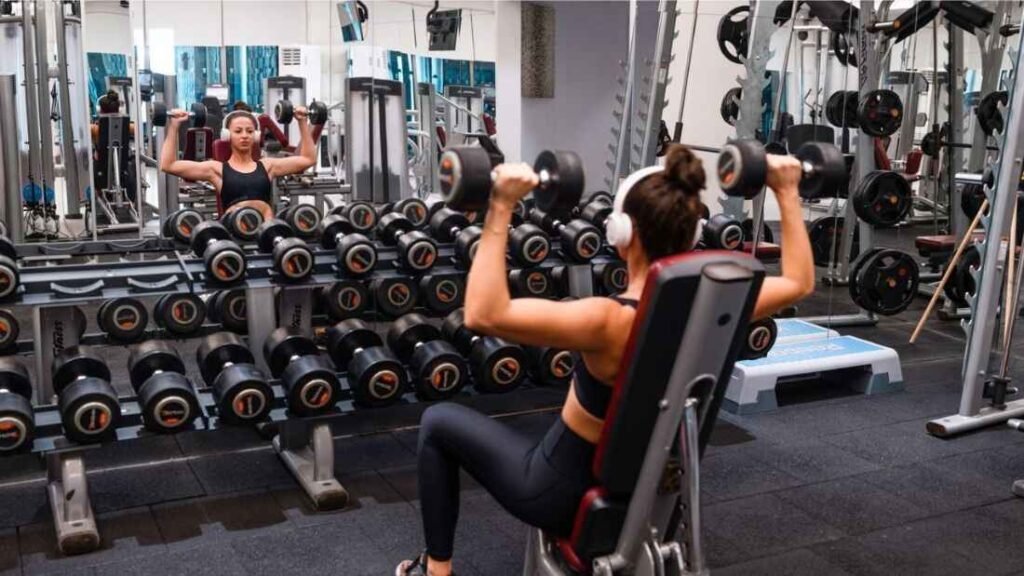
Traditional resistance training typically uses external loads such as barbells, dumbbells, kettlebells, cables and weight machines.
It can include general gym training, bodybuilding, powerlifting and Olympic weightlifting, although each specific type has a different focus.
Its biggest advantage is measurable progression and high customisation. Adding a small amount of weight to a squat or machine press is straightforward, with plenty of different types of exercises to choose from. Making this an effective option for building muscle and maximum strength.
Free weights (dumbbell, barbell, kettlebell, etc.) require you to control the load, while machines are more controlled and often guide the movement. The difference in strength gains between the two is specific to the exercise: practising free-weight lifts improved free-weight performance, while machine training improved machine-based performance. (2)
For example, I can hack squat around 200 kilograms on a machine, while my barbell back squat is closer to 140 kilograms. Those numbers are not directly comparable because the exercises load and support the body differently.
Neither is better; they simply provide a different way to train and show the benefits of having the ability to choose different exercises based on the type of training you want to do.
The main limitations to this type of strength training are access, cost and the time needed to learn technical lifts.
TIP:
Track machine and free-weight exercises separately. Judge progress against your previous performance on the same exercise.
Calisthenics and Bodyweight Training
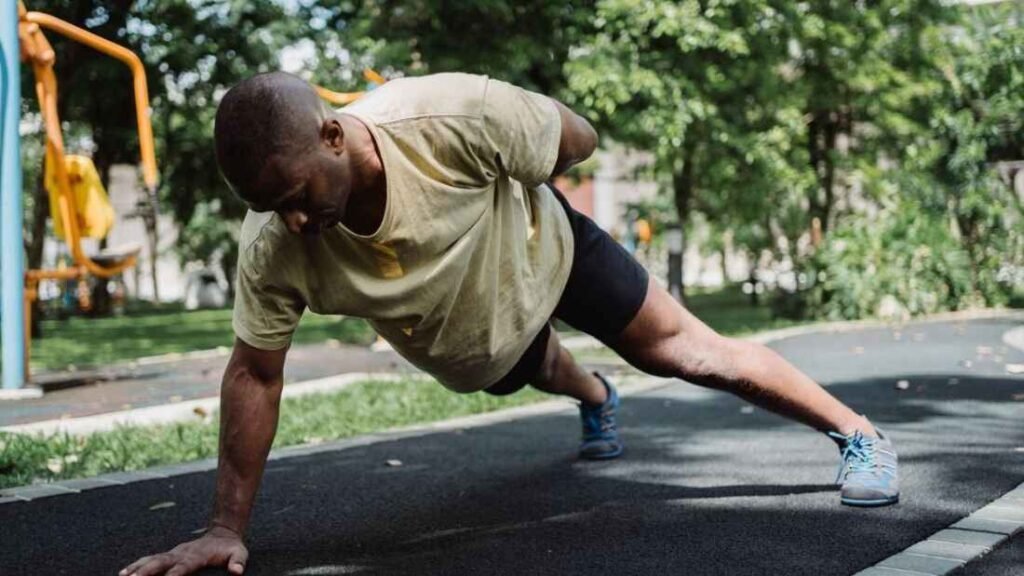
Calisthenics uses your body as the resistance. Push-ups, pull-ups, dips, rows, squats, lunges and handstands can all form part of bodyweight strength training.
Progress comes from changing leverage, increasing range of motion, slowing the movement, adding repetitions, using one limb, or eventually adding external weight. This makes calisthenics useful for developing relative strength: how strong you are compared with your bodyweight.
It also requires plenty of coordination and body control.
Bodyweight training can build strength and muscle when the exercise is difficult enough. One small eight-week study found that load-matched push-ups and bench presses produced similar improvements in chest and triceps muscle thickness and bench-press strength. That does not mean every bodyweight exercise is the same as weights, but it shows that bodyweight can provide a real strength stimulus with the right load. (3)
A few things to watch out for are that progress can be less obvious, lower-body training is often neglected, and progress can jump significantly, such as moving from a regular push-up to a one-arm push-up.
The main advantage is accessibility. It is mostly free, and most exercises have easier and harder versions, allowing you to match the movement to your current ability.
My guide to staying fit while travelling long term includes practical bodyweight examples and proves how it can be effective at maintaining strength.
TIP:
When high repetitions become easy, increase leverage or range of motion before turning every set into an endurance test.
Group Strength Training
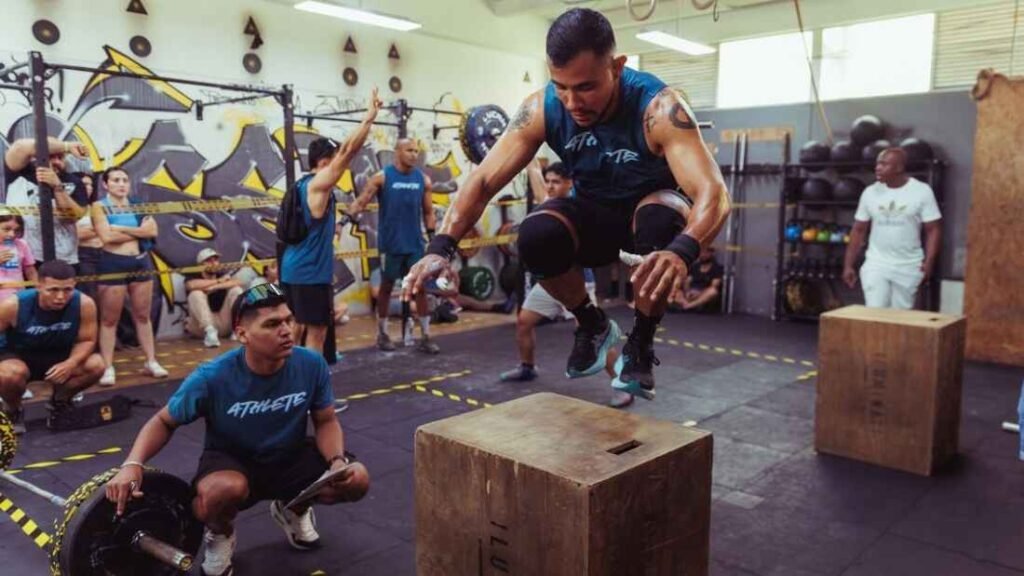
Group strength training means completing a coached strength workout in a class with other people. Depending on the class, you might use dumbbells, kettlebells, resistance bands or bodyweight exercises. Examples include strength circuits, hybrid classes and CrossFit-style workouts.
Well-designed group sessions can improve strength, power, endurance, speed and agility. The exact result depends on the exercises and programming. (4)
The main benefits are coaching, a fixed session time and a group environment that can make training easier and more enjoyable to repeat. Research in older adults has found improvements in quality of life, along with high attendance and social support. (5)
The quality varies between classes. A class described as “strength” may still be mostly fast circuits with light resistance. Constantly changing the workout makes progression harder to measure, and a large group can mean less individual coaching.
TIP:
Ask how the class tracks progress. Repeated exercises and recorded loads or repetitions give you something useful to compare over time.
Pilates
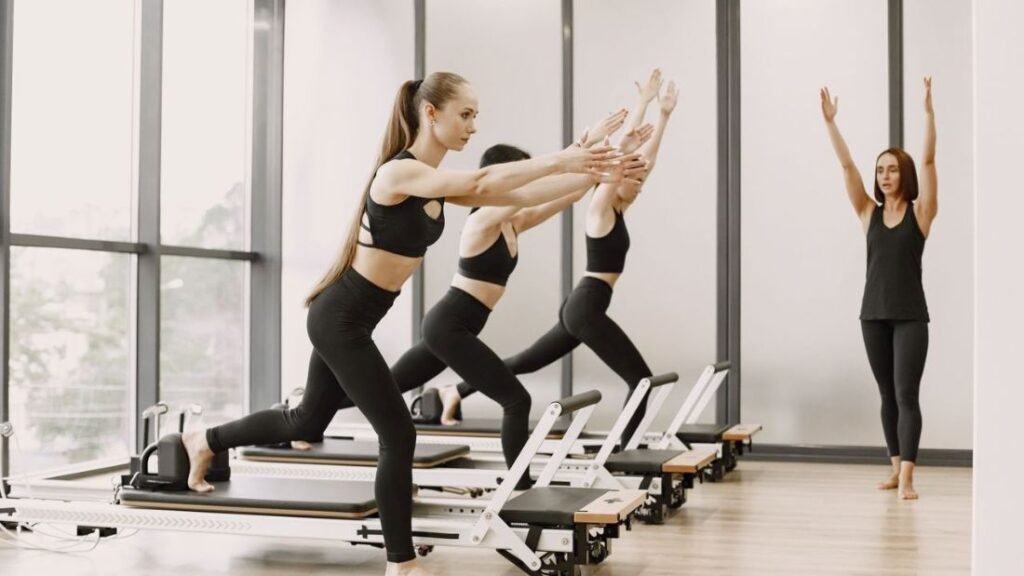
Pilates is a generally low-impact form of resistance training built around trunk stability, controlled movement, breathing and posture. Mat Pilates relies mainly on bodyweight and leverage similar to calisthenics, while reformer pilates adds adjustable spring resistance.
Pilates is often taught in instructor-led group classes, which is why it can look similar to group strength training. However, pilates is a specific training method that can also be practised individually or with one-on-one instruction.
Research suggests Pilates can improve balance and may reduce pain in some conditions, although much of the available evidence is low quality. (6)
Research in older adults has also found that its effects on strength and power remain uncertain. (7)
Pilates still works the muscles against resistance. As you improve, exercises can be progressed through spring resistance, leverage, range of motion and more difficult variations.
Pilates also overlaps with mobility and flexibility training. If those are priorities, see what mobility and flexibility are and how they fit alongside strength work.
TIP:
Track the spring setting, range of motion, repetitions or exercise variation. This makes progress easier to see from one session to the next.
Strength-Focused Yoga
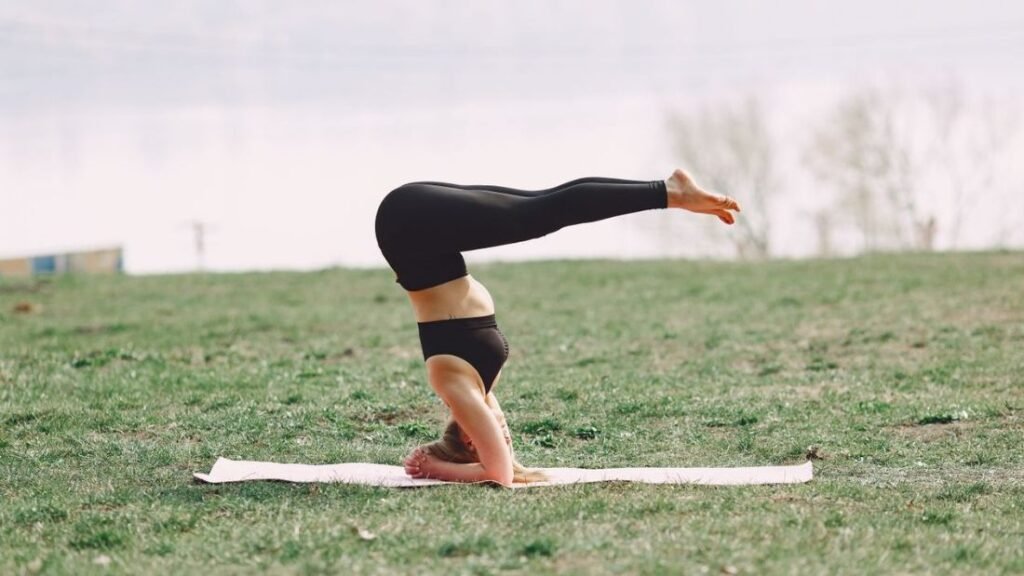
Its important to note that not every type of yoga is strength training. Vinyasa, Ashtanga and power yoga can include demanding weight-bearing poses, isometric holds and repeated transitions.
Yoga and calisthenics both use bodyweight as resistance, but they organise the training differently. Calisthenics focuses on progressing specific strength movements and skills, while strength-focused yoga combines sustained poses and flowing transitions with balance, mobility and breathing.
Yin and restorative yoga focus more on flexibility and relaxation, so they do not provide the same strength stimulus.
Strength-focused yoga can develop muscular endurance, balance, control and mobility at the same time. Research in older adults has found moderate improvements in muscle strength, balance, mobility and lower-body flexibility, although the results cannot automatically be applied to every age group or style of yoga. (8)
Progression is the main limitation. A longer hold or harder sequence increases the challenge. Yoga also contains plenty of pushing and bracing, but usually little pulling resistance.
TIP:
If yoga is your main strength training, add a pulling movement such as rows, pull-ups or band rows to cover a gap that yoga rarely trains well.
How to Choose a Type of Strength Training
How to Choose a Type of Strength Training
Start with the result you want.
- Weights and machines if maximum strength, muscle growth or clearly measurable progression is the priority.
- Calisthenics if you value body control, relative strength and minimal equipment.
- Group training if coaching, structure and training with others will help you stay consistent.
- Pilates if you want controlled resistance, muscular endurance and precise movement.
- Strength-focused yoga if you want to combine muscular endurance with balance and mobility.
You can also combine them. Weights might be your main method, with yoga or Pilates supporting mobility and control. Calisthenics can cover training at home, while a group session can add a social aspect, structure and variety.
Personally, I use weights and machines at the gym as my main method of strength training. I use calisthenics to maintain strength while travelling or when I cannot get to the gym, and occasionally use strength-focused yoga when I want something different.
If you combine strength work with deliberate endurance training such as running, cycling or swimming, that becomes a broader hybrid training approach.
TIP:
Pick one primary method to track and progress. Use the others to cover gaps instead of changing your entire approach every week.
Is This for You?
All five options can have a place in a strength routine, but they do not produce identical results. Choose the one that fits your goal and your life, then make sure it stays challenging as you improve.
The method only works if you can keep doing it and give your body a reason to adapt.
For a wider look at how strength fits with cardio and mobility, read How to Train for Lifelong Fitness.
References
- Currier BS, et al. Resistance Training Prescription for Muscle Function, Hypertrophy, and Physical Performance in Healthy Adults: An Overview of Reviews. Medicine & Science in Sports & Exercise. 2026.
- Haugen ME, et al. Effect of Free-Weight vs Machine-Based Strength Training on Maximal Strength, Hypertrophy and Jump Performance: A Systematic Review and Meta-Analysis. BMC Sports Science, Medicine and Rehabilitation. 2023.
- Kikuchi N, Nakazato K. Low-Load Bench Press and Push-Up Induce Similar Muscle Hypertrophy and Strength Gain. Journal of Exercise Science & Fitness. 2017.
- Wang X, et al. Effects of High-Intensity Functional Training on Physical Fitness in Healthy Individuals: A Systematic Review with Meta-Analysis. BMC Public Health. 2025.
- Cruz-Ferreira A, et al. A Systematic Review of the Effects of Pilates Method of Exercise in Healthy People. Archives of Physical Medicine and Rehabilitation. 2011.
- Oliveira LS, et al. Effects of Pilates Exercises on Strength, Endurance and Muscle Power in Older Adults: Systematic Review and Meta-Analysis. Journal of Bodywork and Movement Therapies. 2024.
- Shin S. Meta-Analysis of the Effect of Yoga Practice on Physical Fitness in the Elderly. International Journal of Environmental Research and Public Health. 2021.