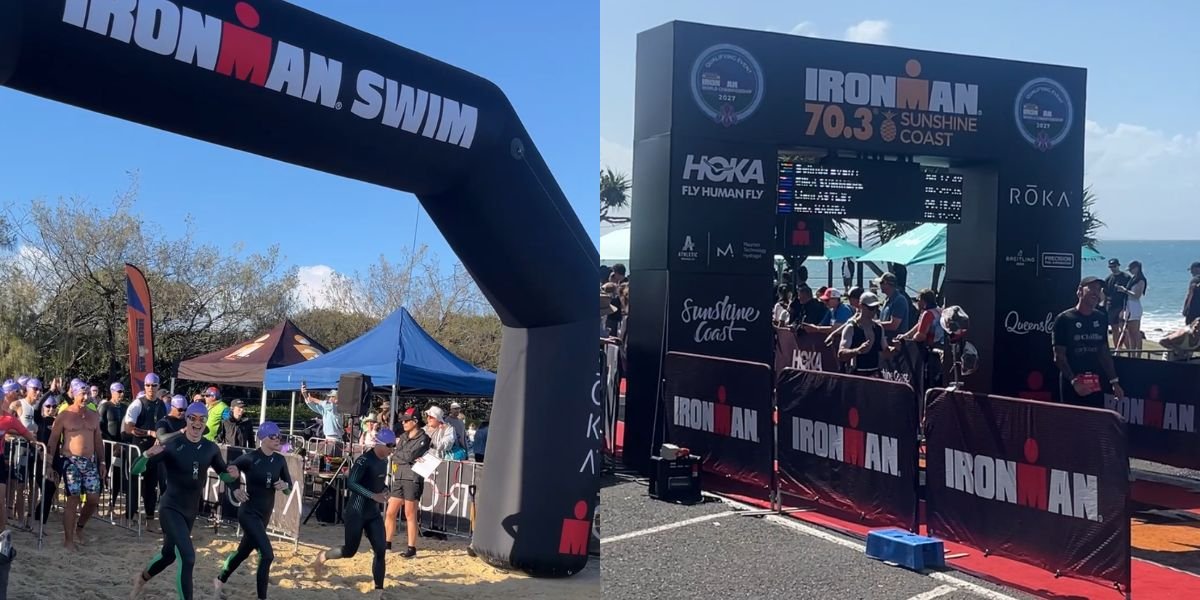
A half Ironman triathlon is a 1.9 km swim, 90 km bike ride and 21.1 km run, completed consecutively. A half Ironman is also often called a 70.3, referring to the total distance in miles. These distances are half of what is required for a full Ironman.
Preparing involves developing fitness across three sports, learning practical skills and getting comfortable with your equipment.
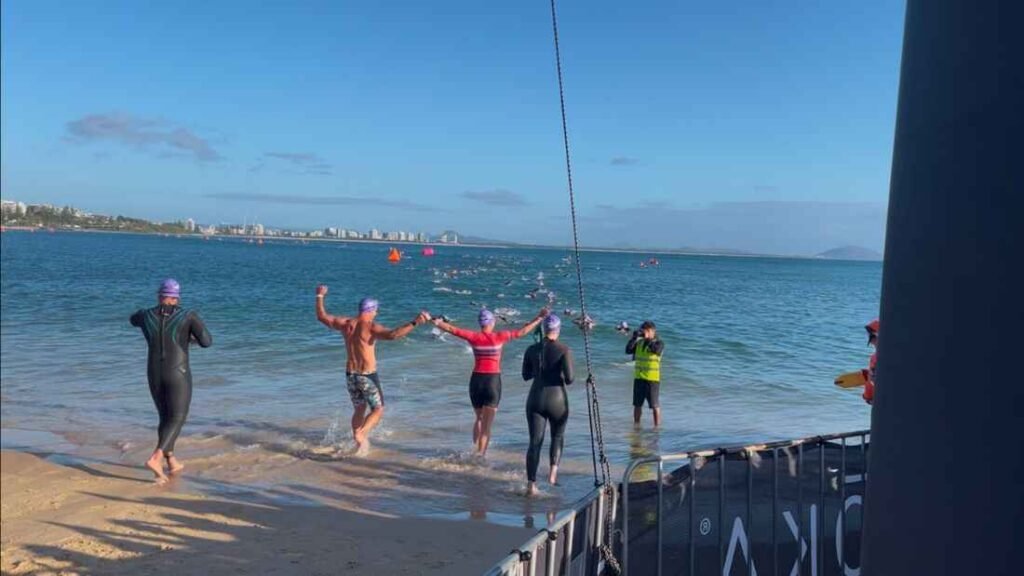
This guide explains those demands, drawing on personal experience from my recent preparation for Ironman 70.3 Sunshine Coast in September 2026.
Table of Contents
How Fit Do You Need to Be Before Starting?
People start preparing for this type of event with different levels of fitness and experience.
Your starting ability in each discipline helps determine where your training time needs to go.
Someone who comfortably runs a half marathon but struggles to swim has different priorities from an experienced swimmer who is new to running.
You can maintain an established ability while giving more attention to the disciplines that need developing.
A simple self-rating can help determine where you currently stand:
- 0: Almost completely new to the sport.
- 1: Some experience, but limited distance or confidence.
- 2: Comfortable over shorter distances, with endurance or skills still to develop.
- 3: Comfortable covering the individual race distance, with some specific training required.
For example, my starting point looked roughly like this:
| Discipline | Starting rating | Training priority |
|---|---|---|
| Swimming | 0/3 | Learn freestyle, develop endurance and become confident in open water. |
| Cycling | 1/3 | Build outdoor riding skills, distance and comfort on the bike. |
| Running | 3/3 | Maintain my existing running ability, then practise running after cycling. |
These are rough planning scores. Even 3/3 in running still needs some specific training for the challenge of running after a long swim and ride.
If one or two disciplines need substantially more work, you can focus your development there while maintaining the others. If all three need a lot of work, allow more preparation time and plan for regular practice in each.
Tip: Use the weakest areas to guide your priorities, then reassess as you improve.
How Much Time Does the Training Take?
As a broad planning guide, allow roughly 6–13 hours a week as preparation develops, depending on your starting ability, session lengths and race goal. Start with a manageable workload and gradually build towards the training you need.
For a reference point, an IRONMAN novice training plan runs for 20 weeks, roughly five months. (1) Allow additional time if you’re still learning a discipline or developing basic fitness.
A practical target to build towards is 2-3 sessions per week in each discipline, plus at least one strength session. Adjust the balance to maintain your stronger disciplines while developing the weaker ones.
How to Build Up
- Establish consistency. Find your local pool, get comfortable riding regularly and establish manageable running sessions. Shorter sessions help you build the routine.
- Make small increases. Gradually increase total training hours and session frequency. (2) Add a short session or extend an existing one while keeping the rest of the week similar. Turning your comfortable 20 km ride into 50–60 km adds substantial time and fatigue that can affect your other training.
- Develop longer sessions. Gradually extend one ride and one run, and increase swimming distance alongside technique work. For running, I used the 10% rule as a rough limit on weekly distance increases. It helped me control my progression, although it isn’t a guarantee against injury.
- Include easier recovery weeks. Consider reducing the workload every three to four weeks, or sooner when fatigue starts affecting your recovery and subsequent sessions. (1)
Spread sessions across the week rather than cramming three or four into one day. Personally, I found one or two sessions a day manageable, while three often left me exhausted. Session length and intensity matter too.
What Could an Eight-Hour Week Look Like?
This example includes two swims, two rides, three runs and one strength session, once you’ve built up to these durations.
| Day | Example session | Time |
|---|---|---|
| Monday | Swim + strength | 60 + 30 minutes |
| Tuesday | Run | 45 minutes |
| Wednesday | Bike | 90 minutes |
| Thursday | Swim | 60 minutes |
| Friday | Run | 30 minutes |
| Saturday | Longer ride + short brick run | 150 + 15 minutes |
| Sunday | Rest | — |
| Total | 8 hours |
Your priorities may change that split. A weaker swimmer might make room for additional short swims. I found my swimming improved more consistently when I started swimming 3–4 times per week.
My preparation lasted roughly nine months. I started around five hours a week, aiming to build towards eight to ten hours. Most later weeks were around eight to nine hours, with ten hours becoming difficult to sustain alongside physical work and other commitments.
Tip:
Schedule your longer session first, then fit shorter sessions around work and family. Allow time for travel, equipment preparation and recovery alongside the training itself.
Skills and Training for Each Discipline
Swimming: Technique and Open-Water Practice
Swimming requires both technique and endurance. (3) Combine drills that address breathing, body position and stroke efficiency with gradually increasing swimming distance and total volume. Regular, focused practice is important.
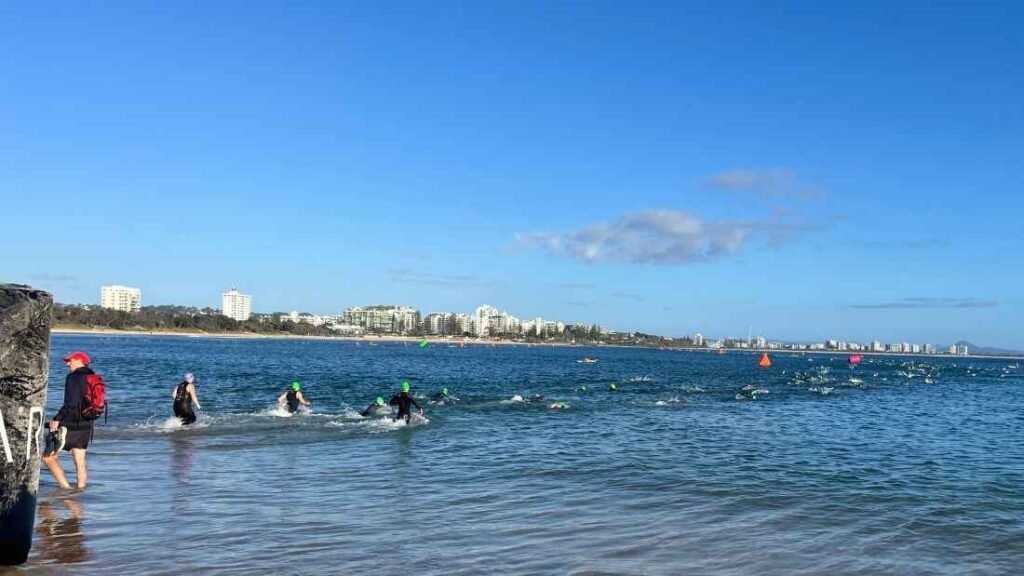
Include open-water swimming to develop sighting, navigating around other swimmers and handling conditions outside a pool. Practise wearing your wetsuit if permitted under your event’s rules. (4) Find goggles that seal comfortably and provide clear visibility.
My swimming improved most when I was doing three pool sessions and one open-water session per week. I used open water for my longest swims, eventually completing 2 km. Covering more than race distance in rough sea conditions gave me a lot of confidence.
Milestone:
Complete 1.9 km in open water at a controlled effort, using your intended race equipment. Knowing your open-water pace also helps you estimate your swim time and choose an appropriate swim-start group where the event uses them.
Cycling: Distance, Handling and Bike Fit
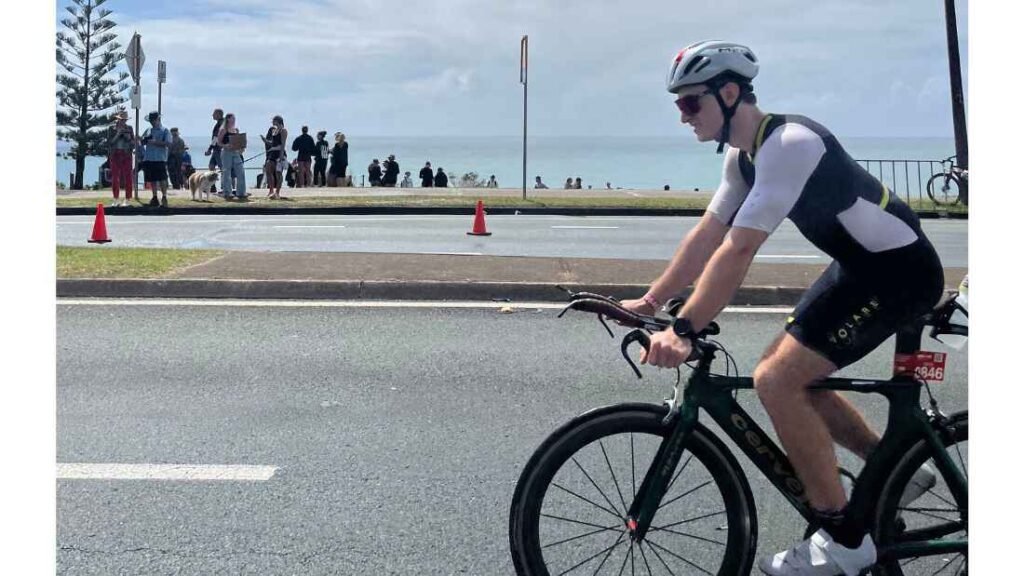
Cycling usually contains your longest training sessions. Build towards longer rides while practising a sustainable effort, eating and drinking, and staying comfortable on the bike.
An indoor trainer allows controlled sessions when weather makes outdoor riding difficult. Outdoor riding develops cornering, braking, gear selection and handling wind. Spend time on the bike you intend to race, paying attention to saddle comfort, frame size and riding position.
Learn basic roadside repairs, including fixing a puncture and replacing a dropped chain. Carry suitable spares and tools, use a sui
table helmet and lights during training, and make sure your food and bottles are accessible. Check the event’s equipment requirements before race day. (4)
I had about three months of specific training on my TT race bike. I learned a lot, but saddle comfort still needs work. On race day, tired shoulders after swimming made reaching food in my rear pockets awkward, something I hadn’t fully appreciated during bike-only sessions.
Milestone:
Build towards a 90 km ride, practising your fuelling and testing your bike setup, race clothing and equipment storage. Check that you can comfortably reach your food and drinks while riding.
Running: Consistency and Running After Cycling
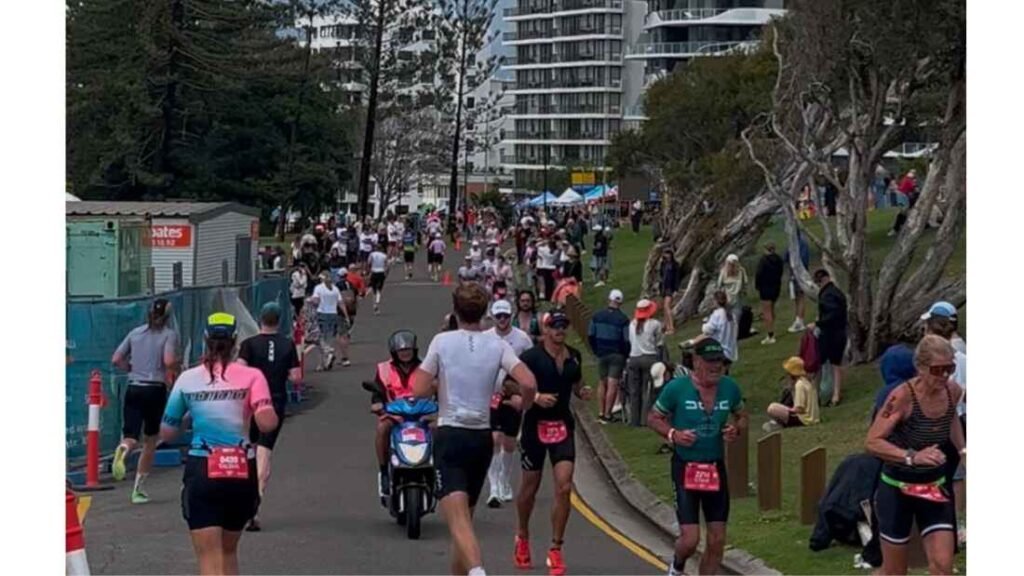
Build regular running around your existing ability, gradually developing a longer run while managing the combined fatigue from swimming and cycling. An experienced runner may focus on maintaining their base; a beginner will need more time to develop endurance.
Include short runs immediately after cycling, known as brick workouts, to practise running on heavy legs and adjusting between sports. (1) Test your shoes, socks, nutrition and hydration. Solid food can be harder to eat while running, so practise with the foods or gels you intend to use.
I rotated two pairs of running shoes: ASICS Novablasts for longer or faster sessions and race day, and GT-2000s for shorter, easier runs. That spread the training mileage across both pairs.
Milestone:
Gradually build towards half-marathon endurance, with a 21.1 km practice run if it fits your training background and recovery. Also practise running after a longer ride, keeping early brick runs short.
A shorter swim-bike-run rehearsal towards the end of your preparation lets you practise transitions, organise equipment and test how everything works together before tackling the full combined distance.
My rehearsal included roughly a 1.9 km open-water swim, a hilly 20 km ride and a 15-minute run. I used accessible sections of the racecourse, which helped me become familiar with both the location and the sequence before race day.
Tip: Use these training sessions to identify problems while you have time to solve them, such as fogging goggles, awkward food storage, uncomfortable clothing and bike fit.
Strength and Mobility: Keep Them in the Week
Keep strength training alongside your swimming, cycling and running. It can support endurance performance, with research in triathletes finding improvements in running and cycling economy. (5) Adjust the workload around your other sessions so it remains manageable.
Make room for regular mobility and flexibility work too, focusing on areas that feel restricted. Personally, I notice more stiffness and soreness, especially through my back and neck, when I skip my evening routine.
For practical options, see:
Support Your Training With Nutrition and Recovery
The same nutrition, hydration and recovery foundations apply throughout triathlon preparation.
These guides cover them in more detail:
- Nutrition Essentials for Training: Macros & Calories
- Hydration Essentials for Training: Water & Electrolytes
- What Is Recovery in Fitness?
Is This for You?
A half Ironman gives you a goal that develops fitness and skills across three sports.
Before entering, consider your current ability in each discipline, the months available to prepare, the cost of equipment you might need, whether the weekly training fits around your other commitments and why you want to do it.
For me, the biggest task was developing swimming and cycling while maintaining an existing running base. Roughly nine months of preparation, starting around five hours a week and building towards eight to nine, led to a 6:15 finish time. I finished the run strong beating my previous standalone half-marathon PB as well as recording my fastest 90 km ride.
That’s the value of understanding where you’re starting: you can focus your preparation on the abilities you need to build.
The distances become more realistic as you develop the fitness, practical skills and experience to put them together and finish strong.
References
- IRONMAN. Novice IRONMAN 70.3: 20-Week Training Plan. Copy hosted by Tri-Club Denmark.
- Etxebarria, N., Mujika, I. & Pyne, D. B. (2019). Training and Competition Readiness in Triathlon. Sports, 7(5), 101.
- Seifert, L. & Carmigniani, R. (2023; first published online 2021). Coordination and Stroking Parameters in the Four Swimming Techniques: A Narrative Review. Sports Biomechanics, 22(12), 1617–1633.
- IRONMAN. 2026 Competition Rules. See also the current event-specific athlete guide.
- Luckin-Baldwin, K. M. et al. (2021). Strength Training Improves Exercise Economy in Triathletes During a Simulated Triathlon. International Journal of Sports Physiology and Performance, 16(5), 663–673.